
Help us advocate for you. Please follow, share and like our content.
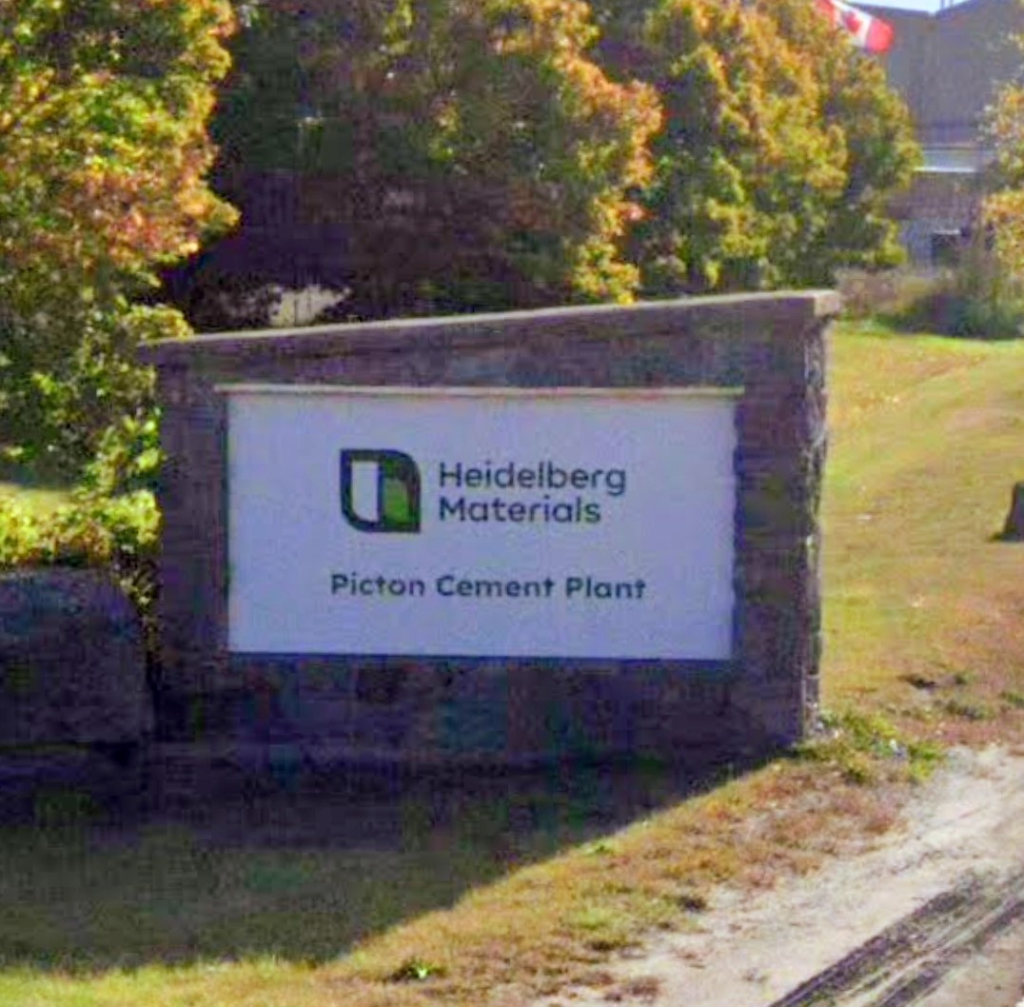
With Highline Mushrooms closing its Prince Edward County facility, the Picton cement plant owned by Heidelberg Materials Canada Limited (“HMCL”) now stands as the community’s last large private industrial employer. Its survival matters not just for jobs, but for the stability of the County’s tax base. Yet a closer look at the plant’s ownership, output, and the global trade context shows that its future cannot be taken for granted. The intent of this article is simply to outline the risks associated with manufacturing plants in this sector in Canada and the trend of industry consolidation, macroeconomic impacts, tax regiments and tariffs.
Scenarios for the Future
While it is impossible to determine the future, here are some hypothetical scenarios. We hope the optimistic scenario is the most likely one to materialize. The specific figures and statements referenced in this article are estimates and based on publicly available industry reports, planning documents, council records, environmental reports, and community submissions, and in no way meant to be indicative of actual numbers, as the specific data points quoted in this article are not publically available for HMCL. Available data, where relevant, has been attributed to a source. We welcome feedback from HMCL and will corporate any clarifications or additional information. We are committed to ensuring our reporting is accurate and will consider any verifiable materials shared with us.
- Optimistic (status quo) – Employment remains steady at 200+, U.S. tariffs are avoided, Ontario provides energy relief, and HMCL invests in modernization. The plant continues to anchor PEC’s industrial base, with ~$40 million in total annual economic value.
- Moderate risk – U.S. tariffs trim exports, forcing production cutbacks. Headcount drops closer to 120–150. Tax and payroll contributions fall by 30–40%, with ripple effects across the County.
- Worst case – Tariffs coincide with rising hydro costs and stricter carbon rules. Output is slashed, staff fall below 100, and the site is partially idled. PEC loses millions in payroll and tax revenue, with economic value cut in half or worse.
Challenges Beyond Trade
Ontario’s electricity costs: Trade policy isn’t the only risk. Cement manufacturing is extremely energy intensive. Ontario’s electricity costs remain significantly higher than competing jurisdictions in the U.S. Midwest. Even with provincial relief programs like the Industrial Conservation Initiative, cement plants in Ontario struggle with competitiveness. The Ontario Energy Board (OEB) has done a terrible job containing hydro costs for Ontarians and Businesses. Its mandate needs to be revisited and the OEB needs to be supervised closely.
Decarbonization and Climate Policy: This is the most significant long-term risk. Cement production is a highly energy-intensive and carbon-emitting industry. Global pressure to reduce CO2 emissions, coupled with Canada’s escalating carbon pricing and environmental regulations, puts older, less efficient plants at a disadvantage. While HCML is a global leader in decarbonization (investing heavily in carbon capture and storage at its Edmonton plant), there’s a question of whether it will prioritize investing in a major, and costly, overhaul of the Picton facility to make it carbon-neutral. If regulations increase compliance costs, the probability that the plant will close is almost a certainty.
“Hard-to-abate” costs: Carbon costs are another looming issue. Cement is considered a “hard-to-abate” sector under Canada’s climate policy. As carbon pricing escalates, Heidelberg Materials will face pressure to invest in alternative fuels and carbon capture. The question is whether Picton — an aging facility — will be prioritized for upgrades or gradually wound down in favor of newer plants elsewhere. A situation similar to the Highline Mushroom plant in Wellington. The benefits of low cost direct port access and an aging plant is what will tip the scale in the near term.
Plant Age and Modernization: The Picton plant has been in operation since 1958. While it has been modernized over the years, an aging facility is more susceptible to operational challenges and may not be the first choice for major new investments in decarbonization technology compared to newer, more efficient plants. The HMCL plant has also faced safety and compliance challenges. In 2024, HMCL was fined $190,000 for a natural-gas explosion at the Picton site in 2021 that injured three workers. The HMCL facility remains under close regulatory oversight, with a new Environmental Compliance Approval issued in 2024 covering air and noise emissions.
Anti-industrial business rhetoric: The anti-industrial business rhetoric from what appears to be mostly retired residents who aren’t in the job market doesn’t help. Young families need well paying jobs with benefits that only industrial, manufacturers and technology companies generally offer, not minimum wage mom and pop wineries. Most of these retail, hospitality and agri-businesses are not profitable, are burning cash and tend to be side hobbies of wealthy and/or retired individuals who have moved to the County recently.
These headwinds mean that closure of the HMCL plant, while unlikely in the short term, is a real possibility as other jurisdictions offer more incentives and HMCL is able to boost production at other modernized plants.
The Bottom Line
The Ontario and Canadian governments are making it increasingly difficult for energy intensive businesses to remain viable. Headwinds include bloated “make work” bureaucracies, endless red tape, regulatory complexities and industrial policies such as the carbon tax which makes Ontario a more expensive place to do business in compared to other jurisdictions. The result? Businesses leave. Jobs are lost. And communities face devastating consequences.
Prince Edward County cannot afford to lose its last serious industrial anchor. The HMCL Picton cement plant provides not just jobs, but an estimated $30–40 million in total annual economic value, along with millions in tax revenues that stabilize the municipal budget. With global trade pressures, high hydro costs, and environmental compliance challenges, its future is not guaranteed.
It is the responsibility of local leaders — Council, MPP Tyler Allsopp, and MP Chris Malette — to do everything in their power to keep these jobs in the County, and to finally build a strategy for attracting more manufacturing investment. Without that commitment, PEC risks becoming a community sustained only by seasonal tourism, agriculture, and real estate — while residents shoulder ever higher bills for basic services.
Ownership History
The HMCL Picton cement plant opened in 1958 as Lake Ontario Cement. It was acquired in the 1980s by Ciments Français, which later merged into Italcementi. In 2016, Italcementi’s Canadian operations were taken over by HeidelbergCement, one of the world’s largest building materials producers. In North America, the business operated as Lehigh Hanson before being rebranded in 2022 as Heidelberg Materials. This chain of ownership reflects a broader industry trend: consolidation into global players who allocate capital across regions based on competitiveness, energy costs, and trade conditions.
Production and Exports
According to Heidelberg Materials’ Canadian Supply Chains Report, the Picton plant produced about 900,000 metric tonnes of cement in 2023, with roughly 25% (~150,000 tonnes) exported to U.S. markets. The rest served Ontario and other Canadian customers. That export exposure means U.S. trade policy directly affects Picton. Washington has imposed new tariffs — of up to 25% on imported cement which means a quarter of Picton’s output has become uneconomic overnight. The plant could be forced to cut production, reroute supply into an already saturated Canadian market, or lay off staff. These steps are likely being considered at this time.
The Heidelberg Materials’ Canadian Supply Chains Report states:
“The Picton Plant produced approximately 900,000 metric tonnes of cement in 2023, shipping the majority of that output to customers in Canada. In 2023, the Picton Plant shipped
approximately 25% of its output to the United States, with approximately 150,000 metric tonnes being delivered to Cleveland, Ohio, and approximately 50,000 metric tonnes being
delivered to upstate New York.”
Note: Canadian cement exports to the US can be subject to tariffs, depending on whether the goods are considered “CUSMA-compliant” and are not subject to specific sectoral tariffs like those on steel and aluminum. At this time information on whether the Picton Plant product is “CUSMA-compliant” is not available. As of August 1, 2025, a general tariff of 35% applies to non-CUSMA-compliant goods from Canada. However, cement generally falls under broader International Emergency Economic Powers Act (IEEPA) tariffs, which can apply if it doesn’t meet CUSMA’s rules of origin. Sources: (1) Industry coverage (Cemnet) (2) Canada Trade Commission
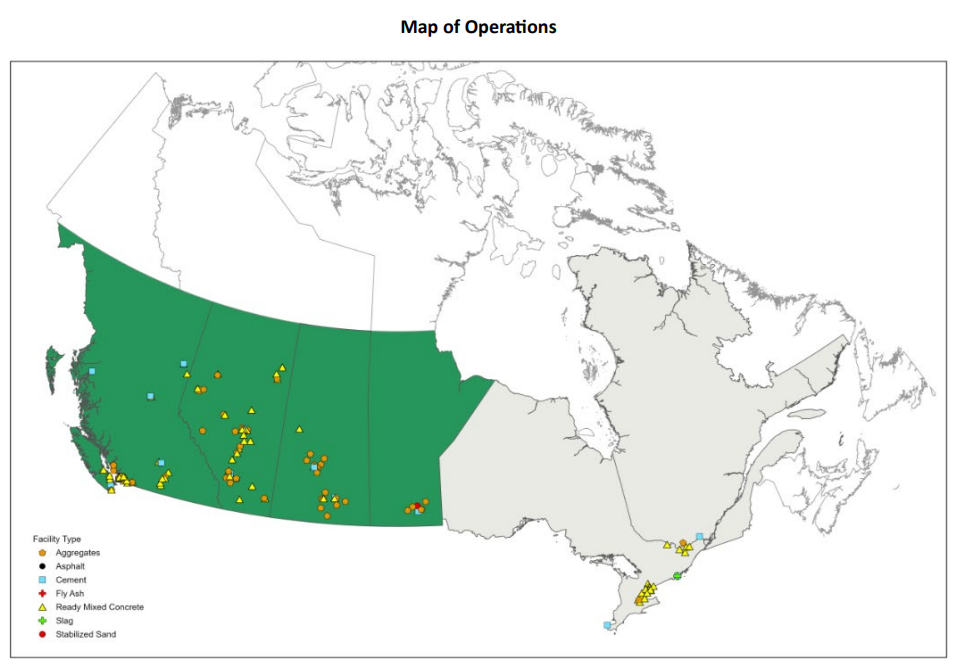
The core business of the Picton plant is the production of various types of cement and blended cement products, which are then shipped to other facilities (like ready-mix concrete plants) to be used as a key ingredient in the final construction materials. As you will see in the map of operations, the HCML plant in Picton, Ontario, is primarily a cement manufacturing facility that utilizes a slag dryer as part of its process. In concrete, “slag” refers to ground granulated blast-furnace slag (GGBFS), a by-product of the steel-making industry that is used as a supplementary cementitious material. It’s a fine powder created by rapidly cooling molten blast furnace slag, and when added to concrete, it reacts with the hydrated cement paste to form additional strength-giving compounds, improving durability, reducing permeability, and increasing resistance to chemical attack.
Employment and Local Impact
While HMCL does not publish plant-level employment data, industry norms provide a useful benchmark. A cement facility of Picton’s scale (900,000 tonnes annually) typically employs 150 to 250 people directly, including operations, maintenance, and management staff. In addition, dozens of contractors, truckers, and service providers rely on the site for steady work.
That translates into an annual payroll of roughly $15–20 million, much of it circulating through local businesses. Add in contractor spending, trucking, and supply purchases, and the total direct and indirect economic value to the region is estimated at $30–40 million annually. This does not include spin-off effects like household spending, housing demand, and charitable donations, which further ripple through the local economy.
Tax Contributions
Exact figures are not public, but estimates can be drawn from industrial property tax rates. A plant of this size could generate several hundred thousand dollars annually in municipal property taxes, plus significant education taxes for the province. Combined with payroll and income tax contributions from employees, the overall fiscal impact likely reaches $4–6 million annually for governments.
If the plant were to downsize or close, those revenues would have to be made up by residential taxpayers — who are already paying among the highest water bills in Ontario and facing property tax increases of nearly 9%.
How Niagara Shows a Different Path
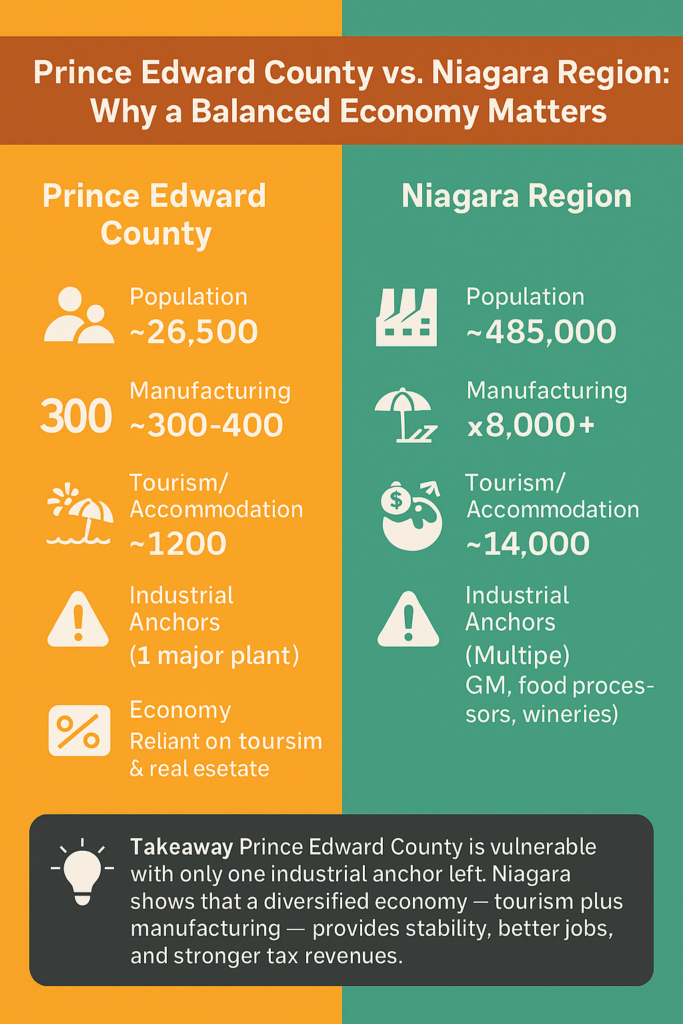
Niagara Region provides a revealing comparison. Alongside wineries and tourism, the region has retained a strong food and beverage processing sector. Canneries, beverage plants, and food processors employ thousands of people year-round, helping to stabilize the economy when tourism dips.
According to Niagara Region’s economic reports, food and beverage manufacturing supports over 8,000 jobs and generates hundreds of millions in GDP annually.
This base has insulated Niagara against the seasonal volatility of tourism. Families have steady employment, municipalities collect consistent tax revenues, and infrastructure planning can proceed with greater certainty.
Prince Edward County, by contrast, has leaned heavily on real estate and seasonal tourism, while its industrial base has shrunk. Highline Mushrooms is gone. The cement plant is the last anchor. Without it, PEC risks becoming a community of seasonal jobs and inflated housing markets, rather than a balanced economy.
The Role of Local Political Leadership
It is not enough for Council to watch from the sidelines. MPP Tyler Allsopp and MP Chris Malette have a direct responsibility to retain and attract manufacturing jobs in Prince Edward County. Protecting the cement plant, and building a broader industrial base, must be at the top of their agendas.
That means:
- Fighting for tariff exemptions for Ontario cement exports.
- Ensuring the plant receives provincial and federal energy-relief and decarbonization funding.
- Supporting infrastructure investments like Highway 49 upgrades to strengthen the plant’s logistics.
- Actively recruiting new manufacturers to diversify the County’s economic base — learning from Niagara’s example.
Tariff overview
A 25% U.S. tariff applies to cement imports from Canada, as announced in early March 2025, however, this tariff was paused for CUSMA-compliant goods and the application of this tariff continues to be a dynamic situation with ongoing negotiations and updates from trade officials.
Key Details:
- Tariff Rate: A 25% tariff has been announced for cement imported from Canada into the U.S.
- CUSMA Exemption: The tariff is paused for goods that qualify under the Canada-United States-Mexico Agreement (CUSMA).
- Negotiations: The situation is fluid, with ongoing discussions and potential changes to tariff policies.
- Impact: The tariff could lead to increased construction costs in the U.S. and could affect both the U.S. and Canadian construction industries.
For the most current and definitive information, you should refer to the official statements and announcements from Affaires mondiales Canada (Global Affairs Canada) and the U.S. Administration.