
Word on the Street: Snippets | Belleville | Brighton | Cobourg | Kingston | Napanee | Peterborough | Prince Edward | Oshawa | Port Hope | Quinte West | Toronto
Help us advocate for you. Please follow, share and like our content. Join our Facebook Group.

Word on the Street
What residents Are Really Talking About
A comprehensive review of policy and developments that impact our communities.
Feature
The Cost of Living in Your Own Community
A Special Investigation into Taxes, User Fees and Municipal Affordability especially in rural Ontario.
For decades, municipal governments were funded primarily through property taxes, with user fees reserved for specialized services or optional activities. Today, many residents feel that balance has shifted. Property taxes continue to rise, yet so do parking fees, permits, licences and a growing list of charges attached to everyday activities. Read more.
The Quiet Shift No One Is Talking About: Are Counties Becoming Places You Can’t Afford to Live — But Also Can’t Afford to Leave?
There’s a strange contradiction emerging across Ontario’s counties. People are moving in — but long-time residents are feeling pushed out.
Businesses are busy — but many are barely surviving. Homes are worth more — but fewer people can actually afford to live in them. Something has shifted. And while we talk about it in pieces — housing, taxes, groceries, healthcare — we rarely step back and ask the bigger question: Are counties becoming economically unlivable for the people who built them? Read more.
From Crude to Crust: The Invisible War Tax on Your Grocery Bill
The average Canadian grocery trip is starting to feel like a high-stakes negotiation. Just as food inflation appeared to be cooling—dropping to 5.4% in February 2026—the outbreak of conflict in Iran on February 28 has sent a shockwave through the global economy that is landing directly in our shopping carts. While the fighting is thousands of kilometers away, the economic tether between Middle Eastern stability and Canadian food prices is shorter than most realize. Read more.
Councils Need You: Why New Candidates Should Step Forward in 2026.
Counties are approaching one of the most important municipal elections in their histories. The decisions made in 2026 will determine whether Counties become thriving, affordable, sustainable communities — or continues down the path of rising taxes, stagnant job growth, failing infrastructure, and deepening affordability issues. Read more.
Bigger Isn’t Greener: Why Large-Scale Development Is Undermining Communities Across Our Counties
Across counties and rural regions, councils are being told the same story: growth must be concentrated into larger centres, bigger developments are more efficient, and all of it can be justified under the language of a “climate emergency.” Read more.
The Ballot Question Debate May Reveal a Larger Problem.
What the Elections Ontario ruling – and the County’s legal position – may both have overlooked about voter understanding. The most important thing about the Elections Ontario ruling on Prince Edward County’s council-size ballot question may not be whether Hearing Officer James Ayres was legally “right” or “wrong.” The more important issue may be what both the ruling itself – and the County’s legal submissions – appear to have overlooked. Because the deeper concern was never really about grammar. It was about voter understanding. And those are not necessarily the same thing. The proposed ballot question asks: “Are you in favour of a third-party review of Council size and related ward boundaries?” Read more.

How a different kind of culture is reshaping Counties
There was a time—not that long ago—when counties didn’t need to announce themselves.
They didn’t need branding.
They didn’t need amplification.
They didn’t need to be seen.
People came here, or stayed here, for something quieter. Something more personal. Read more.
The Number That Should Alarm County Taxpayers
There is a number in Prince Edward County’s own asset-management work that should change how residents read the budget. Not because it is dramatic on its face. Because of what it implies. The County’s Asset Management Plan says its tax-supported assets have an annual lifecycle funding target of about $35.7 million, while the 2025 Council-approved capital funding for those same tax-supported assets was about $11.5 million. The difference is an annual infrastructure funding gap of about $24.2 million. The plan says the County intends to eliminate that gap gradually over ten years, by 2035. That is the core story. Read more.
When the Anchor Employer Leaves: Why Rural Economies Feel It First—and What Happens When Policy Falls Behind
Across Ontario, a pattern keeps resurfacing: when a major employer scales down or leaves, the effects ripple through the entire community. In rural municipalities, where there are fewer large employers to begin with, that impact is amplified. This isn’t just anecdotal—it’s reflected in the structure of employment itself. Read more.

Nothing Is Free Anymore… Except “Feel Good” Government Advertising
How does this ad help Ontarians? What does “fighting for every auto job” mean? How is spending millions of dollars on such advertising productive use of your hard earned tax dollars? Look in your community newspapers and you will see these full page ads. Several of them. Read more.
The $12 Million Question: What Prince Edward County’s Sunshine List Really Shows
Prince Edward County’s 2025 Sunshine List isn’t just a headline—it’s a signal. The County disclosed 92 municipal employees earning over $100,000, with total compensation exceeding $12 million annually. That’s a sharp increase from 64 employees in 2023, a 43% jump in just two years. Even more striking: the County employs roughly 220 staff, meaning nearly half of all employees now earn above the Sunshine List threshold. Read more.
Ottawa’s cattle-tracking proposal: what’s changing—and why small farmers are concerned
The debate around Canada’s proposed livestock traceability changes has been fuelled by confusion, exaggeration, and very real concern. The viral claim that Ottawa will track “every cow weekly from birth to slaughter” is not accurate. But dismissing the issue entirely would also be a mistake. Because while the proposal is more limited than some suggest, it does expand reporting obligations—and those changes land very differently on a 500-head operation than they do on a small family farm raising a handful of animals. The real issue isn’t whether traceability is needed. It’s how it’s designed—and who carries the burden. Read more.
Changing the Rules Mid-Game: Why Prince Edward County’s Election Sign Decision Raises Serious Concerns
In any democratic system, the rules matter as much as the outcome. That’s why Prince Edward County Council’s decision to shorten the election lawn sign period—during an election year—has raised important legal and ethical questions. Under the proposed change, candidates would only be permitted to display election signs beginning August 22, despite nominations opening May 1. That significantly compresses the time available for candidates to reach voters ahead of the October 26 election. Read more.
The County Is Changing — But For Whom?
“We didn’t leave because we wanted to. We left because we couldn’t afford to stay.” That sentence appeared in the comments after CountyFirst asked a simple question: Is Prince Edward County becoming too difficult to survive in? What followed wasn’t a debate. It was a pattern. Stories of rising costs. Of wages that don’t keep up. Of families making quiet decisions to leave. Of businesses trying to hold on through another winter. Read more.
Prince Edward County Is Choking Innovation — and the Data, the Law, and the Outcomes All Point to the Same Failure
This is no longer anecdotal. According to a recent economic snapshot presented to Council by the County’s own Economic Development Officer, nearly a quarter of the County’s wineries and vineyards are currently for sale. Three of six cideries, two distilleries, and at least nine wineries or vineyards are on the market. Read more.
Is Prince Edward County Becoming Too Hard for Businesses to Survive?
Rumours circulating within Prince Edward County’s hospitality community have raised questions about the financial stability of one of the region’s most visible tourism developments, a notable resort in Wellington. Several individuals familiar with recent staffing changes say employees were laid off. Some sources within the local hospitality sector have speculated that the resort may be facing financial pressure. Read more.
Audit of the 2022–2026 Council term
As the October 26, 2026 municipal election approaches, the residents of Prince Edward County are conducting a rigorous audit of the 2022–2026 term. This Council has presided over a period of unprecedented fiscal volatility, marked by a $90.9 million budget and a debt trajectory that many fear has reached a point of no return. The following report card evaluates the performance of all ten wards, focusing on cost-of-living increases, infrastructure delivery, and the independence of leadership. Read more.
Food Insecurity: What the Data Actually Shows.
Clearing Up Common Misconceptions. Food insecurity in Canada is often misunderstood. Some assume it affects only the unemployed. Others believe it is limited to major cities or remote northern communities. There is also a perception that food insecurity surged briefly during COVID-19 but has since stabilized. The data tells a different story. Food insecurity now affects working households, families with children, rural communities, and urban centres alike. Read more.
2026 Municipal Elections: Candidate Guide
As Prince Edward County enters a pivotal election year, the need for professional rigour and transparent governance has never been greater. With the 2026 Municipal Election on the horizon, we are committed to empowering candidates who are ready to move beyond ‘politics as usual’ and tackle the County’s $131M debt and infrastructure challenges with a technical, data-driven mindset. Read more.
Big Hat, No Cattle: Why Prince Edward County’s growth story needs a reality check
Prince Edward County is not opposed to growth. The issue now facing Council and residents is narrower, but far more consequential: whether the population growth assumptions used to justify major infrastructure spending are realistic, evidence-based, and appropriate for long-term financial commitments. Read more.
Development, Due Process, and Public Trust: Legal Questions Raised by the Waring’s Creek Challenge
A recent news release from the Waring’s Creek Improvement Association (WCIA) has raised serious concerns about development approvals in Prince Edward County. While the merits of the specific dispute will ultimately be determined through formal processes, the issues raised point to broader legal and governance questions that extend beyond a single project. Read more.
The Transparency Gap in Municipal Procurement
Building on the recent adoption of the 2026 budget, the discussion around Prince Edward County’s (PEC) procurement policies has shifted from simple “line-item” oversight to a deeper demand for transparency. With contracted services now representing 20% of all municipal spending, the policy governing how these vendors are chosen—and why some are chosen without competition—is under a microscope. Read more.
Ontario’s Child Care Crisis: Why Day Care Shortages Are Now a Province-Wide Economic Emergency
A surprising fact about Ontario’s labour shortage: The shortage is not primarily a skills problem. It is a child care problem. Across the province, employers report unfilled positions at the same time that parents who want to work remain sidelined for 12 to 24 months waiting for licensed child care. In effect, Ontario is limiting its own labour supply by failing to provide the infrastructure that makes work possible. Ontario has well over one million children aged 0–5, while licensed child care spaces typically cover only 30–40 percent of potential demand. Continue reading.
Why Property Taxes should be cut by 20% — and Why Residents Would Benefit
When residents hear “a 20% property tax cut,” the first reaction is often concern: Does this mean fewer services? Worse roads? Cuts to things people rely on? In Prince Edward County’s case, the answer is no. A 20% reduction is not about cutting frontline services. It is about correcting a cost structure that has grown far beyond what comparable municipalities require to deliver equal—or better—outcomes. Read more.
School Bus Contracts in Ontario: What’s Really Happening — and Why Communities Are Concerned
Across Ontario, school transportation has quietly become one of the most contentious local service issues. Parents, drivers, and small business owners increasingly ask why school bus contracts are being awarded to large, sometimes foreign-owned companies, and whether this comes at the expense of local operators, workers, and communities.The concern is real — but the mechanics are often misunderstood. Read more.
Real Budget Problem: Spending Far More Per Resident Than Neighbours
The 2026 budget shows a familiar pattern — rising taxes, trimmed capital projects, and no real change in operating costs. The most revealing number isn’t the tax increase; it’s what the County spends to run itself. Prince Edward County now spends roughly $3,400 per resident every year to operate the municipality. Just up the road, Quinte West spends about $2,000 per resident. That $1,400 gap explains why taxes here rise faster and why residents feel they get less for more. Read more.
Farmland Fracas — Or Farmer Collapse?
Why Eastern Ontario Is Losing Farmers Faster Than It’s Losing Farmland. If you read recent headlines, you’d think Eastern Ontario is rapidly running out of farmland. Depending on the data source, we’re told that Prince Edward County “loses 3,000 acres a year,” or “hundreds of acres,” or “almost none at all.” Similar claims appear in Northumberland, Belleville’s hinterland, and rural Kingston. The problem? The numbers contradict each other — and they risk distracting everyone from the real crisis. Read more.
Time for Renewal: Why Prince Edward County Needs a New Council in 2026.
Prince Edward County is at a crossroads. After years of rising taxes, worsening service levels, stalled infrastructure work, and governance failures across critical files — from affordable housing to economic development — residents are increasingly asking a difficult but necessary question: Is this the right council to lead the County into the next decade? A clear-eyed review of council’s performance suggests the answer is no. Read more.
Small Money, Big Headlines: The Politics Behind Ontario’s Infrastructure Handouts.
Ontario’s government recently announced $14.9 million in infrastructure funding for Bay of Quinte municipalities under the Ontario Community Infrastructure Fund (OCIF). The headline sounds impressive — until you look closer at the numbers. Prince Edward County’s share: $1.4 million. That’s about enough to patch a few rural roads, not rebuild them. For comparison, the County’s single largest road project, County Road 49, carries a repair price tag of $52 million. So what’s really going on here? Read more.
Picton Terminals Study: Big Promises, Bigger Questions.
A new report commissioned by the Chamber of Marine Commerce (CMC) and authored by Aviseo Conseil — with support from the Canada Border Services Agency (CBSA) — paints an optimistic picture: if Picton Terminals were to become a customs-cleared container port, it could generate $26.4 million in new business income every year, create steady jobs, and boost local prosperity. It’s an ambitious vision. But beneath the big numbers are serious questions about infrastructure, accountability, and whether Prince Edward County taxpayers could end up footing the bill. Read more.
Ten Years, No Keys: The Failure of the Prince Edward County Affordable Housing Corporation.
Your taxes and Council at work: Ten years after it was formed, Prince Edward County’s Affordable Housing Corporation has failed to deliver a single completed home — despite millions in taxpayer funding, free land, and endless studies. CountyFirst investigates how bureaucracy replaced action, and what needs to happen now. By conservative estimate, PECAHC has now consumed well over $1 million in taxpayer value — when including staff time, land transfers, and consulting expenses — without producing a single occupied unit. Read more.
Time for a Chamber That Works Year-Round.
Prince Edward County’s Chamber of Commerce has long described itself as the “voice of business.” But after another difficult year of closures, layoffs, and missed opportunities, that voice sounds increasingly out of tune with the real economic needs of the County. The Chamber’s latest presentation to Shire Hall painted a grim picture: Highline Mushrooms’ relocation to Leamington, Starbucks’ closure in Picton, Scotiabank’s Wellington branch shutdown, and ongoing Loyalist College program cuts. Each represents the same problem — an economy built on a fragile seasonal base. Read more.
Real Estate Commissions
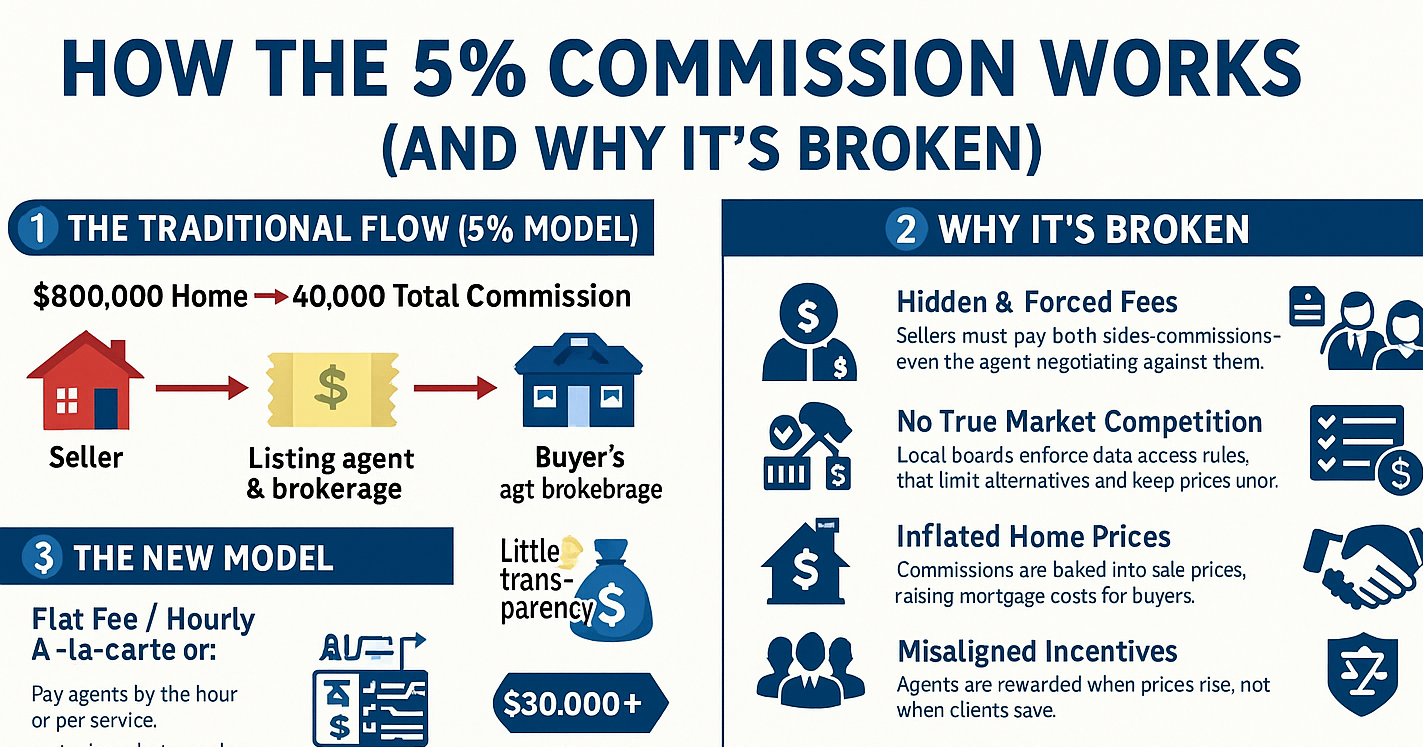
The Beginning of the End for Real Estate Commissions. RE/MAX’s $7.8 Million Settlement Signals the Collapse of the 5% Real Estate Model. A court has approved a $7.8 million class-action settlement with RE/MAX over inflated commissions. Read more.

Follow the Money
How much is Prince Edward County paying consultants like WSP — and what are we getting for it? WSP writes the plans. Council approves them. Then WSP gets paid again to interpret them. That’s not planning — that’s a business model. Read more.

Consultants Write the Rules
When Consultants Write the Rules, Taxpayers Pay the Price. Another consultant-designed straightjacket that stifles free enterprise while draining public funds. Read County’s New Zoning Bylaw: When Consultants Write the Rules, Taxpayers Pay the Price. Read more.

Wellington is “growing”?
The Scotiabank branch in Wellington — the village’s only bank — will close in June 2026. The closure exposes a contradiction at the heart of County planning: how can Wellington be promoted as a “growth centre” when it’s losing the basic services for a thriving community? Read more.

Chris Malette voted “No”
According to the Auditor General’s report, ArriveCAN ballooned from an initial $80,000 estimate to nearly $59.5 million. When Parliament was given a chance to claw back nearly $60 million of taxpayer money wasted on a dysfunctional app, Malette voted “No.” Read more.

Two Peas in a Pod
Rebel News called it political persecution. The Picton Gazette called it racism. Neither called it what it was — a complex local story that demanded facts, not framing. When opinion is masked as news, both outrage and moral panic replace truth. Read more.
Council Size
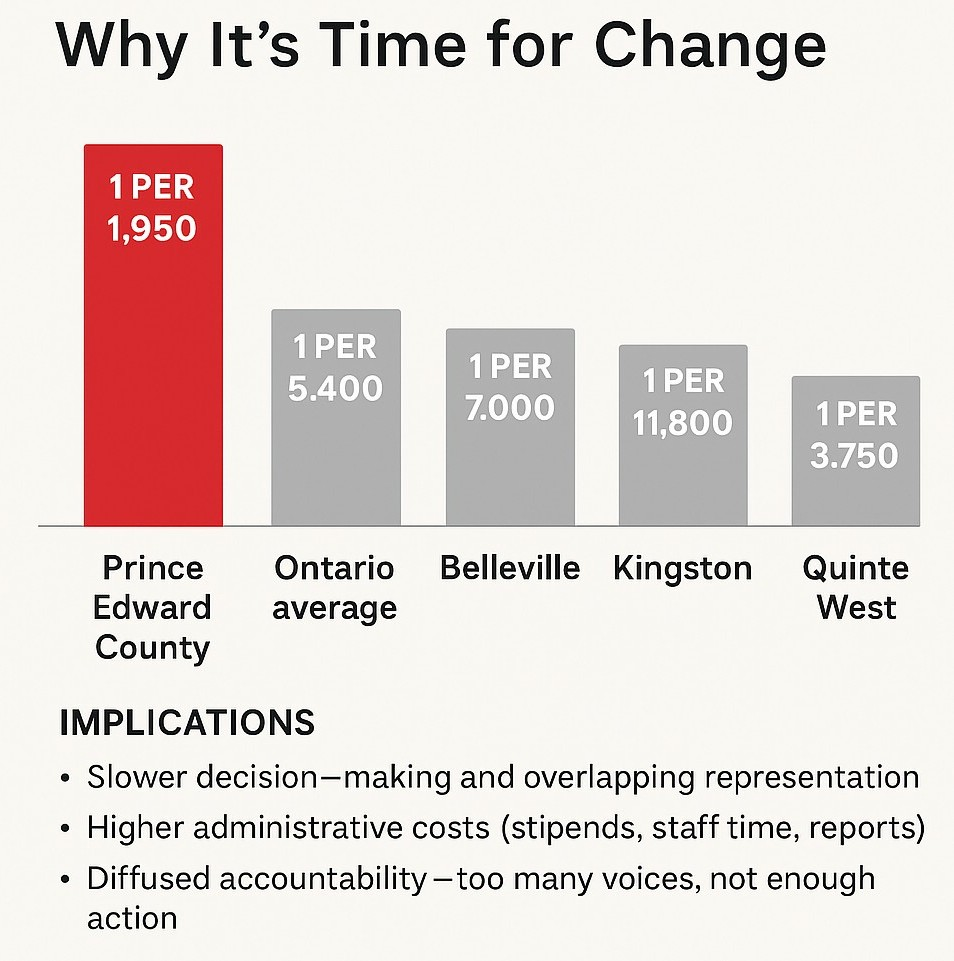
A Referendum on Council Size Is a Waste of Time and Money. Why County Council should lead — not hide behind a ballot question. Prince Edward County plans to ask voters in 2026 whether to hold a third-party review of council size and ward boundaries. It sounds democratic, but it’s not. A referendum is costly, non-binding, and a way for council to avoid making a decision it was elected to make. Dozens of Ontario municipalities have reviewed or reduced council size without referendums. County Council can — and should — do the same. So why do it? Because a referendum lets council look active while doing nothing. Read more.
Consultants and Brain Drain
Consultants, Contracts, and the Cost of Complacency: How Prince Edward County Outsourced Its Brain. Prince Edward County has developed a bad habit: hiring consultants to do the thinking, contractors to do the work, and communications firms to explain why. Over the past decade, the County’s spending on “contracted services” has nearly doubled — from $11 million in 2015 to more than $20 million in 2025. By contrast, municipalities like Belleville and Quinte West have kept outside contracting flat or tied to capital projects. Instead of building in-house expertise, a dependency has been created. taxpayers are footing the bill. Read more.

Speed Cameras
Cash Grab or Life Saver? A Data-Driven Look Across Canada. Arguments about “tax grabs” make headlines, but the evidence from Canadian cities and provinces is consistent: automated speed enforcement (ASE) cuts speeding and serious crashes—especially around schools. Where cameras have been restricted or removed, policy makers typically pivot to a narrower use (school/playground/construction zones) rather than claiming they don’t work. For Belleville and other towns, the question isn’t ideology; it’s what guardrails, metrics, and transparency we adopt if cameras remain legal in Ontario. Read more.
Lazy Politics
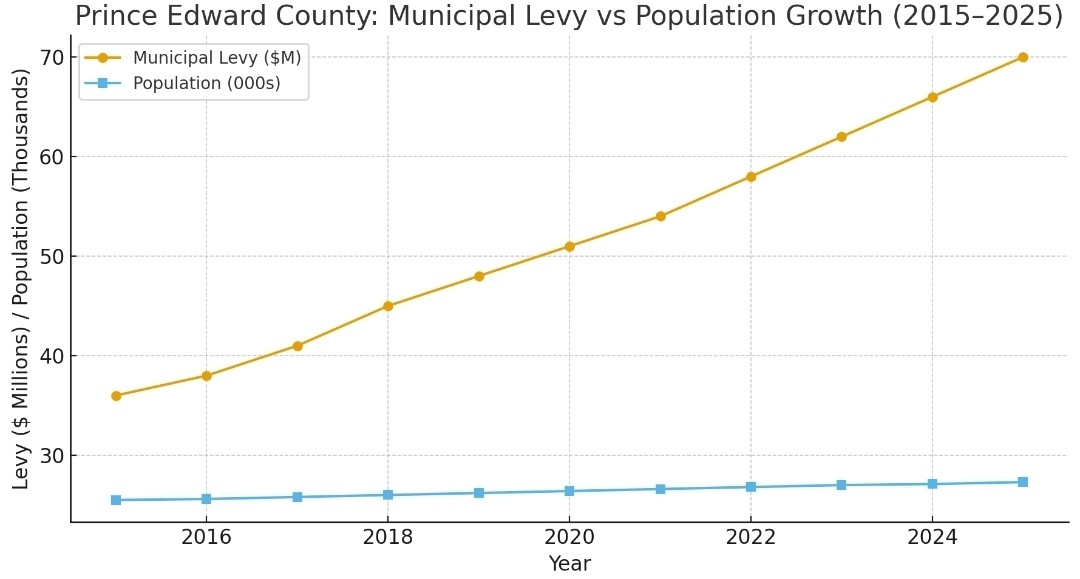
Instead of addressing inefficiency, wage inflation, or the cost of endless consulting, Council simply raises rates each year and congratulates itself for “balancing the budget”. Read more>

Hefty OPP bill
Prince Edward County’s OPP policing costs have hovered around $4.5–4.8 million annually for the past five years — a significant share of local taxes. Read more>
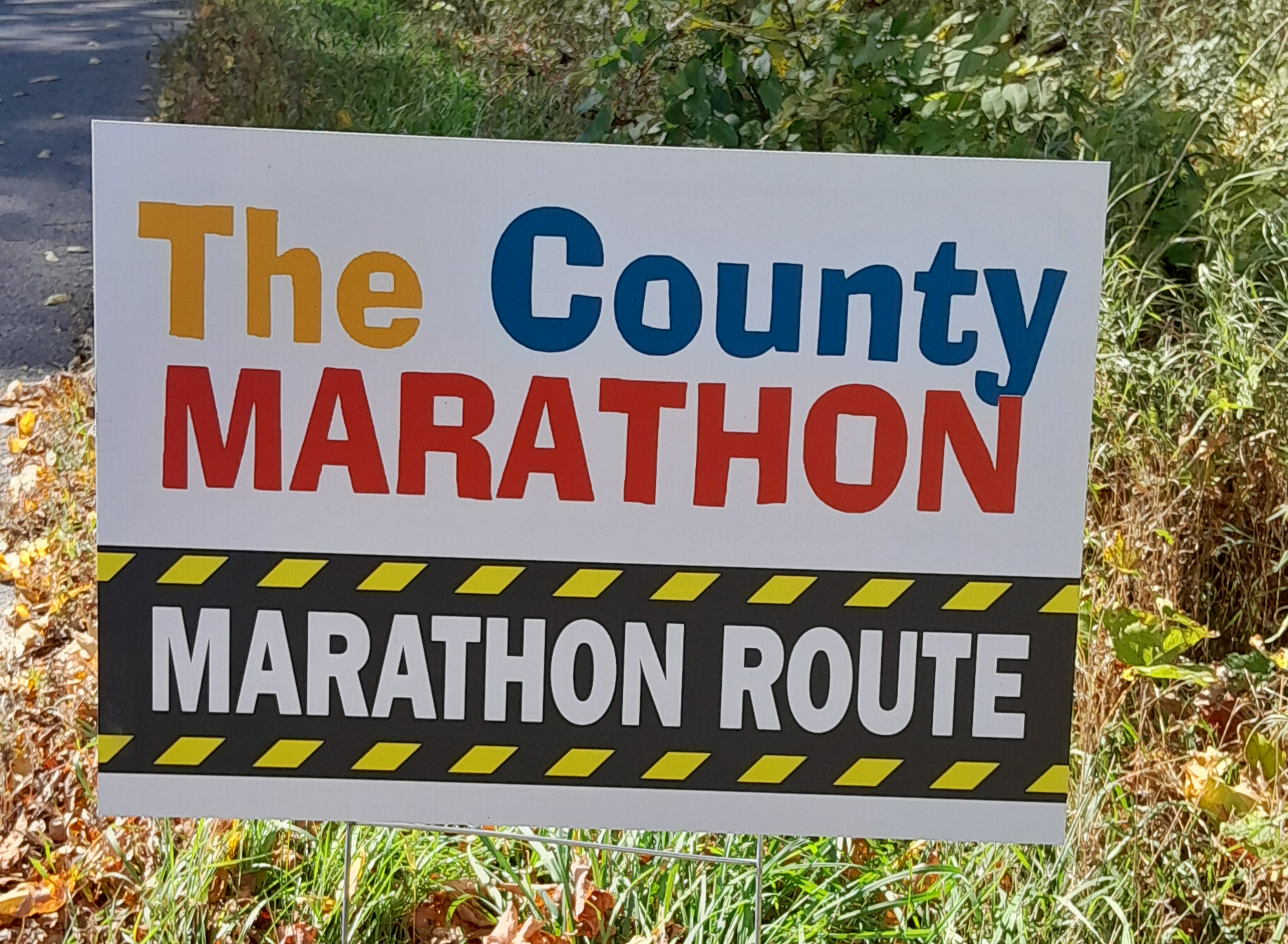
County Marathon
Major roads were closed for hours for the annual County Marathon. Future marathons should be routed away from towns and major arteries, not through them. Read more>

Tim Hortons Incidents
Two separate incidents tied to a local Tim Hortons have sparked questions about employment rights, police authority, and possible criminal conduct. Both situations touch on larger issues of law and accountability. Read more>

Diploma Mills
Ontario Colleges Lost Their Way: From Workforce Builders to Diploma Mills. Generic business, IT, and hospitality programs multiplied, not because Ontario needed them, but because they attracted high tuition from abroad. Read more>

Forever Chemicals at Base 31?
While petroleum hydrocarbons and lead contamination have been documented and partly remediated, one glaring omission: no PFAS testing report for the development area is currently publically available. Read more>

Bylaws Instead of Jobs
Instead of tackling the real issues threatening our community’s future—jobs, economic stability, and infrastructure—Council continues to lose itself in endless debates over red tape and minor bylaws. Read more>
Permitting Bureaucracy
If you want something done slowly, regulate it. If you want it stopped entirely, send it through Ontario’s permitting system- a bloated permitting apparatus, less about compliance—and more about endurance. Read more>

Media Subsidies
Why professors running a local newspaper got subsidies while patients wait hours for care. The federal government continues to spend heavily on subsidies for for-profit media companies. Read more>
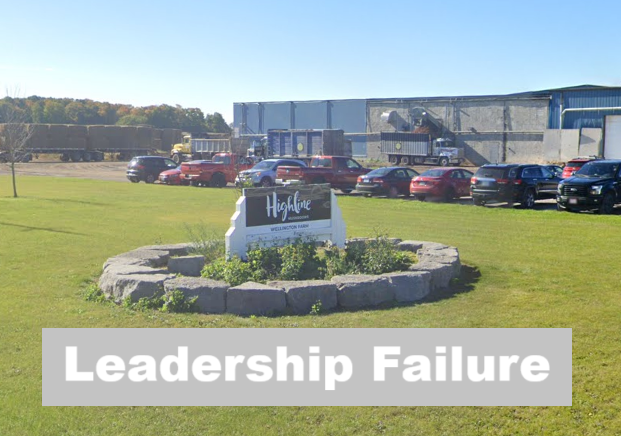
A glaring reminder
A glaring reminder that local and federal leadership — from Council at Shire Hall to MPP Tyler Allsopp and MP Chris Malette — have failed to create a serious strategy to attract, retain, and expand manufacturing jobs in the County. Read more>

Picton’s Cement Plant
The County’s Last Industrial Anchor. The plant now stands as the community’s last large private industrial employer. A closer look at the plant’s ownership, output, and the global trade context shows that its future cannot be taken for granted. Read more>
County Docs “Progress”?
PEC’s physician recruitment reports that “nine new doctors” have come to the County since 2022 and that “1,750 residents” have found a family doctor since January of this year. When we benchmark against other communities, the picture becomes more complicated. Read more>
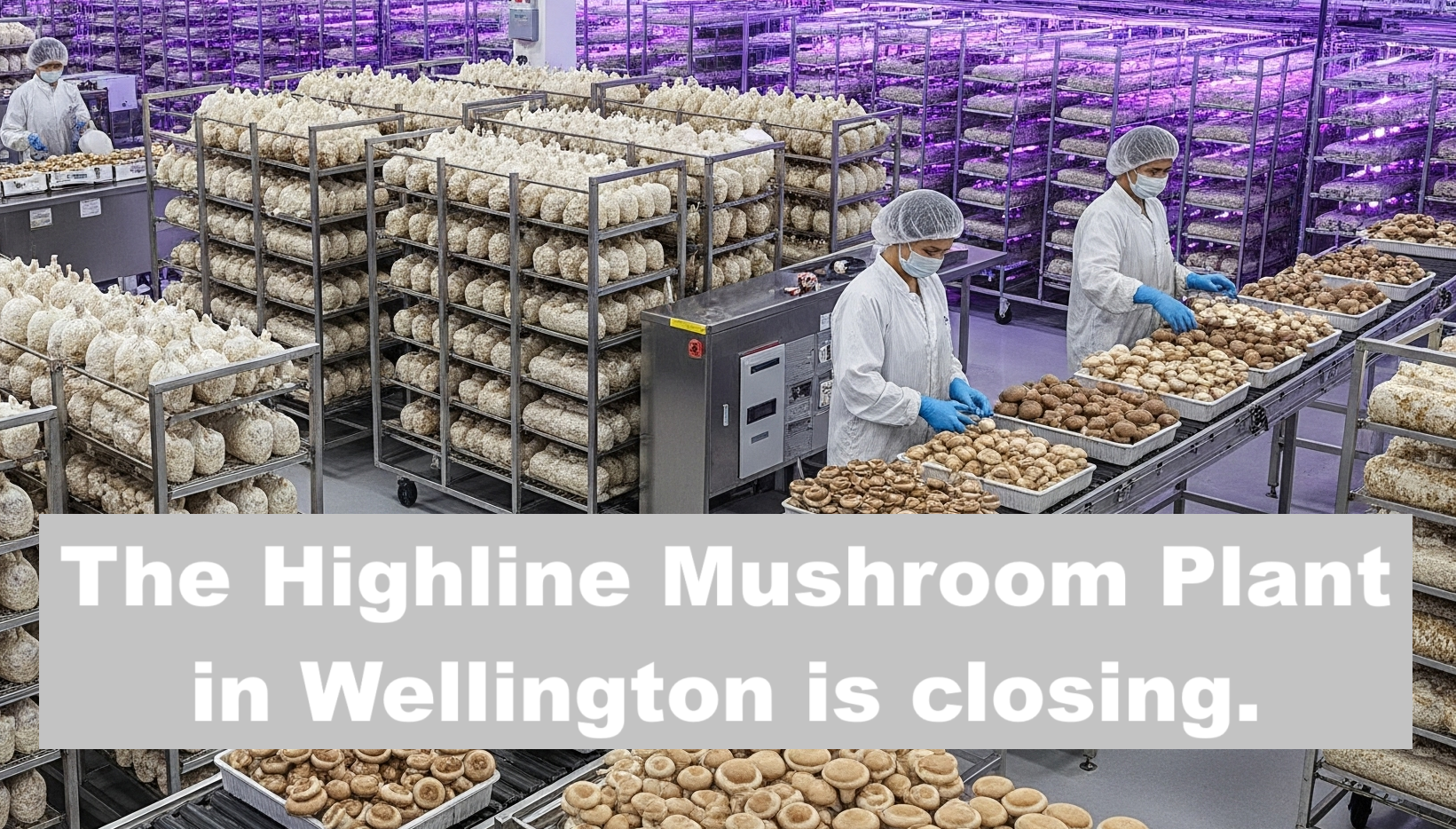
Highline plant closing
The Highline Mushroom Plant in Wellington is closing. All 300 employees are expected to be laid off. Read more>

Anchor Community Centre
Paid for by Developers. Picton has no full-scale gymnasium, and very limited options for after-school programs. Read more>

High Vet Costs
Rural Pet Owners Face High Costs Amid Shortage of Veterinary Clinics. The province could face a shortfall of 3,000 veterinarians. Read more>
Rising Water Bills a Crisis
A Picton family recently opened their municipal water bill and were stunned: $742 for a single billing period. Read more>

A House of Cards?
Promises of “better process” should not be confused with solutions. The County still faces the same hard math. Read more>

Rising Food Insecurity
One in four Canadians is now grappling with food insecurity, with some individuals enduring entire days without eating. Read more>

Developers must pay
Why Developers Must Carry the Full Burden. one principle must guide local decision-making: growth must pay for growth. [Read more]
A Recipe for Crisis
Prince Edward County is on the verge of making decisions that could permanently alter its future — and not for the better. [Read more]

Lobby Registry
Time for Transparency: Why Prince Edward County Needs a Lobbyist Registry for Higher Accountability. [Read more]
Top Concerns
Top concerns of rural residents in Eastern Ontario: Roads, Healthcare, Development, Tourism and Energy costs. [Read more]

Integrity Commissioner
Where should the new Commissioner start? Other municipalities offer some lessons: Shine a light on conflicts of interest. [Read more]

Supply Management
Why This Farming Cartel Harms Most Canadians. Canada’s supply management system is often defended as a fair trade-off. [Read more]

Property Taxes
A mounting combination of taxes and fees that now place PEC among the most heavily taxed communities in Ontario. [Read more]

Inaction is costing lives
Breathtaking incompetence. What would it take the Province to install a 4-way stop at Hwy 62 and CR1? [Read more]

Cell Phone Service
Each summer, Prince Edward County’s beaches, wineries, and festivals bring crowds — and a collapse in local cell service. [Read more]

EVs vs. Infrastructure
Pennies for Infrastructure – And a Cold Shoulder from China on Canola while public services across the country are literally falling apart [Read more]

Emergency Room crisis
14% higher risk of death or hospitalization within 7 days compared to those who stayed for treatment.
[Read more]

Youth Employment
Youth Employment Hits Lowest Level Since 1998 as Canada Loses 51,000 Jobs. The youth sector saw a decline of 34,000 jobs. [Read more]

Rental Construction
Rental units under construction have skyrocketed from fewer than 5,000 in 2000 to over 150,000 by 2025. [Read more]

County Finances
Rick Currie’s letter to the Wellington Times raises some serious concerns about the financial trajectory of Prince Edward County. [Read more]

Starlink Contract
Doug Ford’s Decision to Cancel the Starlink Contract: A Setback for Ontarians, Especially First Nations. [Read more]

News Briefing
Water, Heritage, Sandbanks, Theatre & Truth: Your County Briefing. deep dives on PEC’s $300M water plan, hospital walkouts…[Read more]

Tourism’s Hidden Cost
Beneath the charm: Is tourism-based employment really serving the long-term interests of the County and its residents? [Read more]
Media Watch

AI conundrum
Sponsored by AI—After Warning You About It? Contradiction raises important questions about transparency [Read more]

Editorial Messaging
Narrative Framing: The “Water Worries” editorial opens with a vivid anecdote: the author recounts a 2020 sunset boat tour on Picton Bay. [Read more]

Fake
The Picton Gazette’s “County Fake” July 16 editorial ironically accuses County First of being fake. [Read more]
News
Could Sandbanks Be Next? Ontario’s Quiet Threat to Provincial Parks
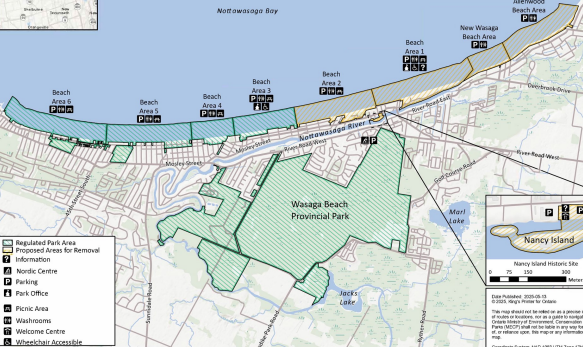
In a move sparking alarm among environmentalists, local leaders, and residents alike, the Ontario government has proposed carving off nearly one-seventh of Wasaga Beach Provincial Park—645 acres of public beachfront and ecologically sensitive land—for private development. And while the implications for Wasaga Beach are serious enough, a deeper concern is emerging across the province: Is this the beginning of a broader effort to dismantle the protection of Ontario’s parks? Could Prince Edward County’s own Sandbanks Provincial Park be next? [Read more]

Ontario Emergency Rooms: Wait Times, Walkouts, and System Pressures
Ontario’s emergency departments are experiencing significantly longer waits than in the past. In the 2022/23 fiscal year, patients waited on average about 118 minutes from triage to see an ER physician, which is roughly 30 minutes longer than a decade prior. Even more troubling, the sickest 10% of patients (90th percentile) waited over 4 hours (257 minutes) for initial assessment, up from about 3 hours (183 minutes) in 2013/14. [Read more]

Theatre: Why We Must Support Organizations Like County Stage
Our local theatre organizations, such as County Stage, Prince Edward Community Theatre, Shatterbox, Theatre Roulant and Regent Theatre, play a vital role in our community’s social, economic, and cultural life. This article explains why supporting these groups is crucial for our county’s continued growth and well-being, focusing on their contributions and the challenges they face. [Read more]
Waterworks: $300M Water Plan Sparks Debate Over Growth, Costs, and Community Impact?
Prince Edward County is at a pivotal juncture regarding its water infrastructure, with plans for a regional water treatment system sparking both support and concern. The proposed strategy involves constructing a new regional Water Treatment Plant (WTP) in Wellington, decommissioning the aging Picton WTP, and connecting the two via a 20-kilometre transmission main. [Read more]

Heritage: Preserving the County’s Physical Legacy- Why Mount Tabor and Our Heritage Assets Deserve Renewal
Prince Edward County’s charm isn’t built in months — it’s layered into the stone, timber, and stories of its historic buildings, rural halls, and public gathering places. From the quaint facades of Wellington’s Main Street to the iconic silhouette of Mount Tabor Community Playhouse in Milford, our physical assets carry the cultural DNA of the County. [Read more]
The Real Cost of Growth: Peel-Back on Local Developers
Prince Edward County is booming – and that boom comes with echoes. In recent years, our idyllic rural county has seen a surge of new development proposals: subdivisions on former farm fields, condo projects by the water, and historic sites eyed for redevelopment. Promises of more housing and economic growth abound. But peel back the glossy renderings, and a more complicated story emerges – one of environmental trade-offs, strained infrastructure, and community pushback. We investigate what rapid growth is costing PEC, and whether local government and developers are balancing progress with preservation. [Read more]
Supply Management: Why This Farming Cartel Harms Most Canadians
Canada’s supply management system—created to stabilize prices and incomes in dairy, poultry, and eggs—is often defended as a fair trade-off. But dig deeper, and it’s clear the system imposes regressive costs on most Canadians while benefiting only a small protected elite. Read more.
The Nexus Between Ownership and Editorial Direction
Who owns the news—and why does it matter? In an era where a small handful of corporations dominate Canada’s media landscape, the line between journalism and corporate strategy is becoming increasingly blurred. This article explores how ownership concentration influences editorial tone, content choices, and the overall health of public discourse. From Postmedia’s U.S. hedge fund backing to Bell and Quebecor’s dual roles as media gatekeepers and telecom giants, the implications are far-reaching—especially for local communities trying to stay informed and represented. Understanding who controls the press is no longer optional. It’s essential. [Read more]
Will Canada Be Forced to Scrap Supply Management for a U.S. Trade Deal?
In June 2025, Canada abruptly repealed its Digital Services Tax, which targeted U.S. tech giants like Google and Meta — a move widely seen as a concession to President Trump. That same week, trade talks with the U.S. were abruptly resumed following threats of major tariffs on Canadian steel, aluminum, and auto exports. Amid these shifting negotiations, speculation has surged on platforms like Reddit and op-eds lamenting that Prime Minister Mark Carney may soon be pressured to dismantle Canada’s supply management regime for dairy and poultry—once again trading domestic food policy for favorable trade terms with the U.S. [Read more]
Ontario’s Permitting Bureaucracy: A Slow Grind Against Economic Progress
There’s an old saying in government affairs: if you want something done slowly, regulate it. If you want it stopped entirely, send it through Ontario’s permitting system. For small businesses, tradespeople, and developers alike, navigating the province’s increasingly bloated permitting apparatus has become less about compliance—and more about endurance. From building permits to environmental assessments to licensing reviews, Ontario’s regulatory ecosystem has grown into a Kafkaesque machine: opaque, inconsistent, and increasingly self-reinforcing. [Read more]
Ontario Insurance Premiums Soar Past Inflation — and Far Above Global Norms
While inflation in Canada hovers at just 1.75%, insurance premiums in Ontario are skyrocketing—up 12% for auto insurance and 11% for home insurance in 2025. These sharp increases have prompted concern among residents already grappling with a high cost of living and stagnant wage growth. But the story becomes even more troubling when compared internationally: Ontario’s insurance costs and their rate of increase are among the highest in the developed world. [Read more]
Tourism’s Hidden Cost: Why Seasonal, Low-Paying Jobs Are Undermining Prince Edward County’s Future
Prince Edward County’s rise as a top-tier tourism destination has brought undeniable short-term gains: bustling wineries, packed summer events, and a surge of weekend visitors. But beneath the charm of farm-to-table dining and boutique accommodations lies a deeper economic question: Is tourism-based employment really serving the long-term interests of the County and its residents? [Read more]
Crumbling Roads in Prince Edward County
Prince Edward County is facing a significant infrastructure challenge: nearly 40% of its roads are in poor or worse condition, as revealed by a recent street scanning report. This deterioration isn’t just a matter of inconvenience—it translates into substantial economic costs for residents, businesses, and public services. Poor road conditions lead to higher vehicle operating costs. According to a study by the Canadian Automobile Association (CAA), the average Canadian driver incurs an extra $126 annually in vehicle operating costs due to poor-quality roads. In Prince Edward County, with approximately 25,000 residents and assuming an average of 1.5 vehicles per household, this equates to an estimated $1.58 million annually in additional vehicle maintenance costs for the community. [Read more]
Taxes in Prince Edward County
Prince Edward County is known for its natural beauty, heritage villages, and agricultural charm. But for many residents—especially seniors, working families, and small business owners—the cost of living here has become unsustainable. The root of the frustration? A mounting combination of taxes and fees that now place PEC among the most heavily taxed communities in Ontario. [Read more]
Why Prince Edward County Needs a Stronger Industrial Tax Base
Municipalities depend on a mix of residential, commercial, and industrial taxes to deliver essential services and maintain infrastructure. Among these, a robust industrial tax base provides stable, high-yield revenue with relatively low servicing costs. Unfortunately, Prince Edward County (PEC) lacks such a base—and the consequences are increasingly visible in its budget. [Read more]
Prince Edward County: A Municipal Budget Outlier Among Ontario Communities
Every municipality in Ontario grapples with the challenge of delivering quality services within its fiscal means. Yet when it comes to the balance between revenue and expenses, Prince Edward County stands out—not just for its ambitious spending, but for the scale of its structural imbalance. Compared to 10 similarly sized or structured municipalities, PEC is a clear and significant outlier in how much it spends relative to its size and income. [Read more]
Why STRs Need a Sunset Clause: 3-Year Exit Plan for Short-Term Rentals
The Evidence: How STRs Are Fueling Housing Scarcity in PEC. From 2016–2017, approximately 50% of home sales in PEC were tied to short-term accommodation activity. That share dropped to 23.2% by 2020, but nonetheless reflects the heavy influence of STRs on real estate pricing and availability. A municipal advisory noted a staggering $47,760 annual home affordability gap and $318/month rental gap in Picton—partially attributed to STR-driven demand surge between 2019–2021. [Read more]
Prince Edward County’s Dangerous Intersections
Recent news coverage across outlets has identified several intersections in Prince Edward County with recurring safety issues—some involving severe collisions—and residents continue to call on County Council and the Ministry of Transportation (MTO) for urgent upgrades. [Read more]
-> Read more
Featured Research
01
RESEARCH
Compensation
Municipal Councillor Compensation in Ontario: Assessing Prince Edward County’s Position
TAXES
Why Prince Edward County Needs a Stronger Industrial Tax Base
Municipalities depend on a mix of residential, commercial, and industrial taxes to deliver essential services and maintain infrastructure. Among these, a robust industrial tax base provides stable, high-yield revenue with relatively low servicing costs. Unfortunately, Prince Edward County (PEC) lacks such a base—and the consequences are increasingly visible in its budget. Read more.
Where Are Our Taxes Going? The $191.30 Million County Budget That Still Can’t Fix Our Roads.
Every year, residents of Prince Edward County pay some of the highest property taxes in Ontario. And yet, many rural roads remain in disrepair, infrastructure is crumbling, and core services struggle to meet demand. With a 2024 budget topping a total of $191.3 million in operating and capital budgets, the question on everyone’s mind is simple: where is all the money going? Read more.
Property Tax Growth in Prince Edward County
Prince Edward County (PEC), Ontario, has experienced notable increases in property tax rates over recent years, prompting concerns among residents regarding the value received in municipal services relative to the taxes paid. Read more.
The Hidden Toll of the Municipal Accommodation Tax on County Tourism
When Prince Edward County introduced the Municipal Accommodation Tax (MAT) in 2021, it was pitched as a way to reinvest in tourism infrastructure and support local businesses by collecting a small levy from overnight visitors. The 4% tax applies to hotels, motels, bed & breakfasts, and short-term rentals. But several years in, many tourism operators are asking: who is this really helping? Read more.
PLANNING
Prince Edward County: A Municipal Budget Outlier Among Ontario Communities
Every municipality in Ontario grapples with the challenge of delivering quality services within its fiscal means. Yet when it comes to the balance between revenue and expenses, Prince Edward County stands out—not just for its ambitious spending, but for the scale of its structural imbalance. Compared to 10 similarly sized or structured municipalities, PEC is a clear and significant outlier in how much it spends relative to its size and income. Read more.
Municipal Councillor Compensation in Ontario: Assessing Prince Edward County’s Position
Aligning councillor pay with a living wage—estimated at $37,000 to $50,000 annually in Ontario—would signal that PEC values the work of its elected officials and seeks capable leaders from all backgrounds. Read more.
Tourism’s Hidden Cost
Why Seasonal, Low-Paying Jobs Are Undermining Prince Edward County’s Future. Prince Edward County’s rise as a top-tier tourism destination has brought undeniable short-term gains: bustling wineries, packed summer events, and a surge of weekend visitors. But beneath the charm of farm-to-table dining and boutique accommodations lies a deeper economic question: Is tourism-based employment really serving the long-term interests of the County and its residents? Read more.
How Reliable Is Our Emergency Response in Rural Prince Edward County?
In a rural community like Prince Edward County, where small villages and farms are spread out across more than 1,000 square kilometers, emergency response times aren’t just a matter of convenience—they are a matter of life and death. While many urban areas in Ontario have paramedic and fire services within minutes, rural regions like PEC face unique challenges: long distances, aging infrastructure, and limited staffing, all of which can delay help when seconds matter most. Read more.
INFRASTRUCTURE
Open letter to Mr. Tyler Allsopp, MPP, Bay of Quinte
Urgent Need for Provincial Action on Municipal Road Infrastructure in Prince Edward County. According to the County’s 2022 Asset Management Plan, more than 30% of our roads are rated in “poor” or “very poor” condition. Read more.
The Hidden Cost of Crumbling Roads in Prince Edward County
Prince Edward County is facing a significant infrastructure challenge: nearly 40% of its roads are in poor or worse condition, as revealed by a recent street scanning report. This deterioration isn’t just a matter of inconvenience—it translates into substantial economic costs for residents, businesses, and public services. Read more.
Who’s Responsible for Our Roads? Holding the Province Accountable for Municipal Infrastructure Funding
In Ontario, local roads and bridges are the arteries of rural life—connecting residents to jobs, services, and emergency care. In municipalities like Prince Edward County, where over 1,000 km of roadways stretch across a vast and aging network, maintaining safe and reliable roads is essential to public safety, economic vitality, and quality of life. Read more.
TRANSPARENCY
Prince Edward County Council: Progress, Challenges, and the Path Forward
Municipal government is where decisions most directly impact daily life—from road maintenance and housing policy to water service and emergency planning. In Prince Edward County, councillors play a central role in navigating the growing complexities of rural governance, and while their work is not without criticism, it is grounded in service and increasingly shaped by transparency, public engagement, and measurable progress. Read more.
Financial Analysis Report: Corporation of the County of Prince Edward (2013–2023)
This report from the Prince Edward County Residents Association (PECRA) provides a comprehensive review of the financial performance and departmental trends for The Corporation of the County of Prince Edward over the past ten years (2013–2023). Key focus areas include infrastructure, finance, asset management, and water/wastewater services. The report identifies critical trends in debt, infrastructure conditions, service delivery expenditures, and long-term liabilities. Read more.
Public Payroll in Focus: Prince Edward County’s Staffing Costs in Context
Municipalities across Ontario are grappling with the rising costs of staffing, but in Prince Edward County (PEC), the growth has been especially pronounced. With increasing demands for services and infrastructure, the County has significantly expanded its personnel budget—but at what cost, and with what return? Between 2023 and 2024, the number of County employees earning over $100,000 rose from 34 to 46—a 35% increase. During the same period, total compensation for these high-earning staff grew from $4.3 million to $6.0 million. These figures come from the Ontario Sunshine List and the County’s budget reports. Read more.
HOUSING
Affordable and Attainable Housing in Prince Edward County: Balancing Crisis Response with Jurisdictional Integrity
Prince Edward County (PEC) is in the midst of a housing affordability crisis. Home prices have more than doubled since 2015, and rental vacancies are extremely limited. Many residents—particularly young families, essential workers, and seniors—are finding themselves priced out of the community. In response, the County has taken bold action to address the problem. However, this raises critical questions about jurisdiction, fiscal responsibility, and the long-term sustainability of municipal intervention. Read more.
HEALTHCARE
The Province’s Legal Responsibility in Healthcare Delivery—and How It’s Failing Prince Edward County
Healthcare services in Ontario are governed by a comprehensive set of provincial statutes, the most prominent being the Canada Health Act (R.S.C., 1985, c. C-6) and the Commitment to the Future of Medicare Act, 2004 (SO 2004, c. 5), which collectively place the onus on the provincial government to ensure accessible, equitable, and timely healthcare for all residents. Read more.
Our Core Objectives
- Fiscal Responsibility: Advocate prudent financial management to ensure that taxpayer funds are allocated efficiently, emphasizing value for money in all municipal expenditures.
- Transparency and Accountability: Promote open governance by encouraging practices such as the establishment of a lobby registry, ensuring that decision-making processes are clear and accessible to all residents.
- Infrastructure and Community Services: Prioritize the maintenance and enhancement of essential infrastructure, including roads and community services, to improve the quality of life for all county inhabitants.
- Sustainable Development: Support development initiatives that align with the best interests of all ratepayers, ensuring that growth is managed responsibly and benefits the entire community.
- Civic Participation: Encourage active involvement from residents across all wards by identifying individuals with expertise in areas such as legal affairs and urban planning to contribute to our collective efforts.
Our Approach
To effectively represent and address the diverse concerns of our community, PECRA is establishing a “council” framework. We welcome your participation. This initiative involves appointing PECRA representatives in each ward to monitor and engage with each municipal councillor in their ward, facilitating respectful and informed dialogue and ensuring that resident perspectives are considered in all council deliberations. Our goal is to cultivate a team of capable candidates for future municipal elections, supported by robust canvassing and logistical strategies.
Educate and empower residents
One of our goals is to augment education and to empower residents to understand the fiduciary duties of the County pursuant to Section 44(1) of the Municipal Act, 2001. For example, to address issues that concern them with templates such as to repair roads in their ward (Section 44(1) of the Municipal Act, 2001, S.O. 2001, c. 25).
Leave a Reply