
Help us advocate for you. Join our Facebook Group.
The County has spent tens of thousands on consultants who predict years of population expansion tied to the costly Wellington Waterworks upgrade and multiple new subdivisions.
Those projections are reckless and not grounded in economic reality.
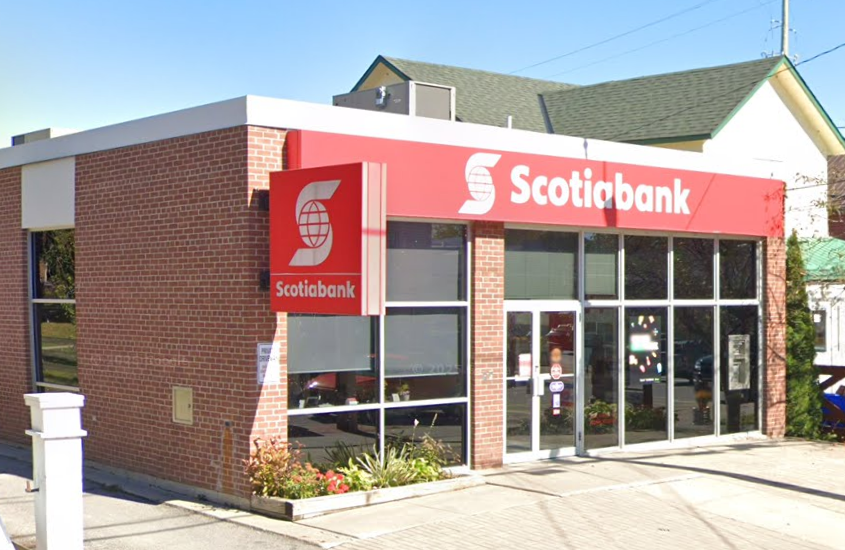
“A female-run branch that serves all the small businesses and residents in Wellington, Bloomfield, Consecon and even Carrying Place will no longer be available to residents. Everyone will have to drive to Picton — which already has four banks — while Wellington will have none. How does this work? Wellington is supposed to be growing, but it won’t even have one bank or ATM? Interesting!” — Local resident
If the reports are accurate, Wellington — the County’s designated “growth hub” — will lose its only bank in June 2026.
Growth Without Services
How can Wellington be a “growth centre” when its most basic services are disappearing?
This isn’t just about convenience — it’s about fairness and whether Canada’s banking system still serves communities outside major cities.
The Highline Mushrooms closure in Bloomfield already stripped away hundreds of year-round jobs. Healthcare access remains limited. Broadband service is patchy at best.
Now, even financial services appear to be vanishing.
What kind of growth model leaves a community with more houses but fewer jobs, banks, and doctors?
The Real Story
Canada’s banking model is sold as stable. In truth, it’s a stagnant monopoly — a system designed for corporate safety, not consumer benefit.
Wellington’s potential bank closure is more than a local inconvenience; it’s a case study in how concentrated industries quietly hollow out rural Canada while regulators look the other way.
If Prince Edward County truly wants growth, it must fight for competition — not just in banking, but in every sector that keeps its communities alive.
Because a town without a bank, broadband, or basic services isn’t a growth hub.
It’s a ghost in waiting.
Who Benefits?
Not you. Not local families or small businesses.
Rich shareholders.
That’s who profits when banks close rural branches, automate jobs, and keep raising fees.
What Council Should Ask for Now
- Banking access guarantees
Secure a deposit-capable ABM in Wellington or a credit-union kiosk before any closure.
If Scotiabank refuses, the County should stop banking with them. - Credit-union entry and mobile banking days
Invite a credit union to host weekly “banking days” at a community centre — a model used successfully in rural U.S. towns. - Fast-track open-banking education
Prepare local SMEs for fintech tools and account-to-account payments under the new federal consumer-driven-finance regime. - Telecom and broadband push
Demand carrier upgrades to meet the 50/10 standard across Wellington, Bloomfield, Consecon, and Carrying Place. - Economic signal check
If a “growth hub” can’t sustain one bank, council must publish a growth-versus-services review before approving more subdivisions.
Surprising Facts: Canada’s “Competition Crisis” in Banking
Six banks control almost everything. Canada’s “Big Six” — RBC, TD, Scotiabank, BMO, CIBC, and National — control roughly 93 % of all banking assets. In the U.S., no single bank controls more than 13 %.
Over 70 % of rural areas have no bank branch. By 2022, 70.8 % of rural census areas had no nearby branch — and the number keeps climbing.
Canadians pay more for less. Chequing accounts average $15–$25 per month, waived only with $3,000–$4,000 minimum balances. In the U.S., most banks offer zero-fee accounts or waive fees for deposits as low as $500.
Foreign banks are effectively locked out. Complex rules make it nearly impossible for foreign banks to open retail deposit-taking branches. Protectionism ensures Canadian incumbents face little pressure to compete.
The system mirrors telecom. Like the Big Three wireless carriers, Canada’s banks operate as a cozy cartel — charging high fees, offering poor rural coverage, and investing minimally where returns are thin.
Rural residents get hit twice. When a branch closes, residents are told to “bank online.” But with broadband speeds below federal targets, that’s not a solution — it’s an insult.
Record profits, shrinking service. Canada’s Big Six earned $55 billion in profit last year — while closing branches, automating staff, and hiking fees.
More Upsetting Facts
Bank fees remain steep. Scotiabank’s “Preferred Package” costs $16.95/month unless you keep $4,000 in the account — out of reach for many.
Foreign competition is discouraged. Regulations and capital rules deter foreign entrants; retail deposit restrictions make true competition impossible.
Consumers pay more, get less. Canadian accounts routinely cost 2–3× more than comparable U.S. accounts. Some charge up to $30/month.
Small communities are left behind. When banks and carriers consolidate, rural Canadians face higher costs, slower service, and less choice.
Cartel-style industries rule both banking and telecom. A few giants dominate, set prices, and ration investment — leaving small towns to fend for themselves.
Evidence & Policy Fixes
Competition and branch closures
- Big Six control 93 % of assets; rural branch access down from 67.7 % (2019) to 70.8 % (2022).
- Branches are expensive to maintain; banks face little pressure to keep them open.
- Federal law only requires notice of closure — not continued presence.
Canada vs U.S.
- The U.S. still has 4,400 banks and 76,000 branches, offering real local competition.
- Canada only began rolling out open-banking legislation in 2024–25 — years behind.
- The Competition Bureau has launched a market study on weak small-business banking competition.
Telecom parallel
- Rural connectivity still below the CRTC 50/10 target.
- PEC residents routinely report dropped calls and slow data — yet pay among the world’s highest wireless rates.
The Politics Behind It
For decades, Ottawa has prioritized “stability” over competition — shielding big banks from foreign rivals. That policy prevented a 2008-style collapse but entrenched an oligopoly that now punishes consumers and abandons rural Canada.
When a major bank leaves a small town, few alternatives are legally allowed to replace it. The same policy logic fuels high telecom prices and weak broadband coverage.
How Consumers Lose
- Higher costs: Canadians pay hundreds more per year in bank and telecom fees than Americans.
- Fewer choices: New entrants face steep regulatory barriers.
- Service deserts: Rural Canada is sacrificed for urban profit centres.
- Digital exclusion: Weak broadband makes “online banking” unrealistic.
- No accountability: Concentrated industries capture regulators and politics alike.
The Bottom Line
Wellington’s situation isn’t an anomaly — it’s the predictable outcome of a closed, anti-competitive system. Who benefits? Rich shareholders. Not average Canadians.
If this branch closes, it will mark not only the end of in-person banking in Wellington but also another victory for Canada’s cozy financial cartel.