
Prince Edward County is not opposed to growth. The issue now facing Council and residents is narrower, but far more consequential: whether the population growth assumptions used to justify major infrastructure spending are realistic, evidence-based, and appropriate for long-term financial commitments.
Infrastructure decisions made today shape property taxes, user rates, and fiscal flexibility for decades. When those decisions rely on optimistic projections that fail to materialize, the risk does not disappear. It is transferred to existing residents.
The question is not whether the County should grow. It is whether it should finance long-lived infrastructure on assumptions that may not hold.
Demographic history does not support high-growth expectations
Prince Edward County’s recent demographic record does not resemble that of a consistently high-growth jurisdiction.
Statistics Canada census data shows:
• 2011 population: 25,258
• 2016 population: 24,735
• 2021 population: 25,704
The County did experience growth between 2016 and 2021, but only after a prior decline. That increase coincided with unusual conditions, including historically low interest rates, pandemic-related relocations, and expanded remote work. None of these conditions can reasonably be assumed to persist over a 25- to 30-year infrastructure financing horizon.
Equally important is age structure. Prince Edward County has one of the oldest populations in Ontario. Births do not replace deaths. Long-term population change therefore depends almost entirely on net migration, which is sensitive to housing costs, interest rates, employment opportunities, and broader economic cycles.
This dependency is structural, not temporary.
Provincial projections define a realistic growth envelope
Ontario’s Ministry of Finance projects Prince Edward County’s population to grow by approximately 15.2 percent between 2024 and 2051.
That projection equates to roughly 0.5 percent average annual growth, compounded. Over a 30-year period, this implies modest, incremental population increase rather than rapid expansion.
While projections are not guarantees, they provide an important reference point. Infrastructure plans that assume sustained annual growth materially above this range should therefore be treated as optimistic and supported by explicit evidence and safeguards.
The compounding risk of assumption error
Small differences in annual growth assumptions produce large differences over long time horizons.
Using a starting population of approximately 25,700:
• 0.0 percent annual growth leaves population essentially unchanged
• 0.5 percent growth produces roughly 17 percent total growth
• 1.0 percent growth produces roughly 35 percent total growth
• 2.0 percent growth produces more than 80 percent total growth
• 2.4 percent growth approaches population doubling
These differences are not theoretical. They determine whether infrastructure debt aligns with actual demand or becomes a long-term burden on existing taxpayers.
Using a high-growth scenario as a stress test is reasonable. Using it as a financing baseline materially increases fiscal risk.
Governance standards for using growth projections
Population forecasts are inherently uncertain. That uncertainty imposes a governance obligation on decision-makers to scrutinize not only the forecasts themselves, but how they are applied.
Where multiple growth scenarios exist, it is essential to distinguish clearly between:
• stress-test scenarios
• illustrative planning ranges
• baseline assumptions used to justify debt and permanent operating costs
If earlier high-growth assumptions are later revised downward, good governance requires transparent explanation, back-testing against actual census outcomes, and corresponding adjustment of infrastructure plans.
Forecasts should inform decisions, not substitute for judgment.
Municipal due diligence and fiduciary-like obligations
There is a legitimate question as to whether the level of due diligence applied to population growth forecasts used in major infrastructure and financing decisions meets the standard contemplated by Ontario municipal legislation. Under section 224 of the Municipal Act, 2001, council is responsible for representing the public interest and for developing and evaluating policies and programs, including those with long-term financial and property tax implications. Sections 290–292 require that municipal budgets be balanced and grounded in reasonable financial assumptions, while section 225 assigns the treasurer a statutory duty to advise council on the financial integrity, sustainability, and long-term impacts of its decisions.
Where population growth forecasts are relied upon to justify debt-financed infrastructure that directly affects property tax rates, these provisions collectively imply a duty to ensure that assumptions are evidence-based, stress-tested, and independently scrutinized. If growth projections later prove materially overstated, and if council cannot demonstrate that it rigorously challenged those assumptions — particularly where forecasts appear closely aligned with development lobbying interests rather than conservative fiscal planning — affected taxpayers could argue that the County of Prince Edward failed to meet its statutory obligations of due diligence and financial stewardship. While no court has made such a finding, the legal exposure is not abstract where property taxes rise as a direct consequence of infrastructure decisions predicated on unsupported growth assumptions.
Provincial oversight duties and potential exposure
Responsibility for due diligence does not rest solely with the municipality. The Province of Ontario also carries statutory oversight obligations under Ontario’s municipal and planning framework. Through the Municipal Act, 2001, the province establishes the legislative regime governing municipal finance, debt limits, and fiscal accountability, and retains authority where provincial approvals, regulations, or funding frameworks materially influence municipal infrastructure decisions. In addition, the Planning Act requires that provincial interests — including fiscal sustainability, orderly development, and the efficient provision of infrastructure — be advanced through provincial policy statements and growth-related oversight.
Where provincial ministries review, enable, or rely upon municipal growth forecasts in approving infrastructure programs, development charge regimes, or growth-enabling funding, there is a corresponding obligation to ensure that those forecasts are reasonable, consistent with demographic evidence, and not unduly shaped by private development interests. If it can be shown that provincial oversight mechanisms failed to meaningfully test or challenge growth assumptions that directly drove long-term property tax outcomes, there may be downstream exposure for the province alongside the municipality. Such circumstances are commonly cited in class action pleadings alleging breach of statutory duty, negligent misrepresentation, or misfeasance in public office arising from fiscal decisions that shift unanticipated costs onto residents.
Why “build first and growth will follow” is a risky strategy
A commonly advanced position holds that population growth is inevitable, that housing supply is the primary constraint, and that infrastructure must therefore be built in advance to unlock development.
This argument deserves consideration. It also carries identifiable risks.
Housing supply is a necessary condition for population growth, but it is not sufficient. People relocate based on employment prospects, incomes, service capacity, and affordability — not simply because serviced units exist.
Prince Edward County’s own experience shows that housing construction has occurred during periods when population stagnated or declined. Household size has fallen, and seasonal or part-time occupancy has increased. New housing has not translated consistently into permanent population growth.
Assuming a direct, linear relationship between serviced housing units and permanent population growth overstates certainty and understates risk.
Timing matters more than intention
The central issue is not whether additional infrastructure may be required at some point in the future. It is whether the County should finance full build-out before permanent demand and cash flows are demonstrated.
When infrastructure is built ahead of demand:
• operating and maintenance costs begin immediately
• debt servicing becomes fixed
• fiscal flexibility is reduced
• tax and rate pressure increases regardless of population outcomes
If growth arrives later than expected, more slowly, or unevenly, existing residents bear the difference.
By contrast, phased expansion tied to demonstrated uptake allows the County to respond to real demand while limiting downside risk.
National and provincial growth does not guarantee local outcomes
Canada’s and Ontario’s population growth is real. It does not distribute evenly across communities.
Larger urban centres with diversified labour markets, transit systems, and institutional capacity absorb a disproportionate share of new residents. Smaller, older, service-constrained communities do not automatically scale at provincial averages.
Assuming Prince Edward County will capture regional or provincial growth rates without addressing its structural constraints is an optimistic assumption that should be explicitly acknowledged and tested.
Containing property tax growth must be a core objective
The most tangible consequence of growth-assumption error is property tax pressure.
Infrastructure financed on optimistic population forecasts must still be paid for if growth underperforms. Debt servicing and operating costs do not adjust downward. Shortfalls are recovered through higher property taxes and user rates.
For fixed-income seniors, working families, and younger households, these increases directly affect affordability and household stability.
Containing property tax growth must therefore be treated as a primary planning objective, not a secondary consideration after capital commitments are made.
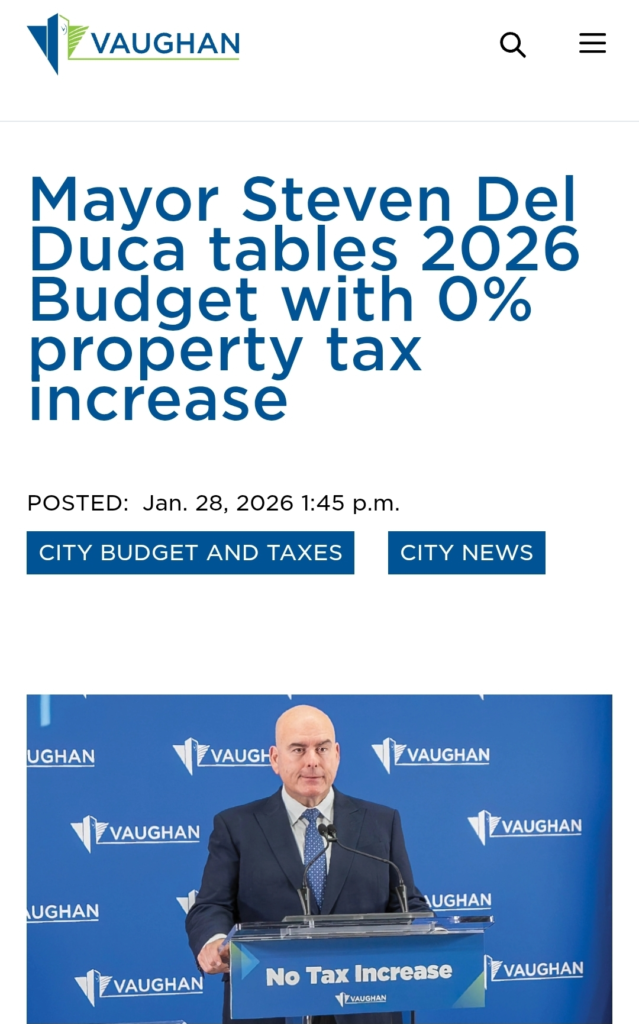
Some Municipalities in Ontario are responding to concerns of residents. (Click on image to see article)
A prudent, evidence-based path forward
A balanced growth strategy for Prince Edward County would include:
- Infrastructure expansion phased to demonstrated uptake
- Preference for modular and incremental solutions where feasible
- Explicit distinction between housing supply and permanent population
- Stress-testing of business cases against low-growth outcomes
- Avoidance of best-case scenarios as debt-justification baselines
This approach does not preclude development. It aligns infrastructure investment with evidence, protects residents from avoidable financial risk, and preserves flexibility as conditions evolve.
Conclusion
Prince Edward County does not need an aggressive growth narrative to justify sound infrastructure planning. It needs assumptions that are proportionate, transparent, and resilient to uncertainty.
Long-term fiscal responsibility requires matching ambition to evidence and financing to demonstrated demand.
In planning, as in life, a big hat only works if there is something underneath it.
Data sources
Statistics Canada – Population History (Prince Edward County)
These establish the County’s actual demographic record and trend.
2011 Census Profile – Prince Edward County
https://www12.statcan.gc.ca/census-recensement/2011/as-sa/fogs-spg/Facts-csd-eng.cfm?GC=3513020
2016 Census Profile – Prince Edward County
https://www12.statcan.gc.ca/census-recensement/2016/dp-pd/prof/details/page.cfm?B1=All&Code1=3513020
2021 Census Profile – Prince Edward County
https://www12.statcan.gc.ca/census-recensement/2021/dp-pd/prof/details/page.cfm?SearchText=Prince%20Edward%20County
These sources support statements about:
- Population decline pre-2016
- Modest rebound 2016–2021
- Lack of sustained high growth
Ontario Ministry of Finance – Long-Range Population Projections
These define the provincial planning envelope and baseline assumptions.
Ontario Population Projections (Official Summary Page)
https://www.ontario.ca/page/ontario-population-projections
Ontario Population Projections – Methodology & Assumptions
https://www.ontario.ca/page/ontario-population-projections-methodology
These sources support:
- The ~15.2% projected growth for PEC (2024–2051)
- The implied ~0.5% annual growth rate
- Recognition of negative natural increase in older regions
Ontario Government – Housing & Infrastructure Policy Context
These clarify the distinction between policy targets and demographic outcomes.
Ontario Housing Enabling Fund – Prince Edward County Announcement
https://news.ontario.ca/en/release/1005021/ontario-helping-build-more-homes-in-prince-edward-county
Supports the point that:
- Housing targets enable servicing
- Targets are not population guarantees
Municipal Finance & Infrastructure Context (General)
These support statements about how municipal infrastructure is financed and why risk transfers to taxpayers.
Municipal Debt & Infrastructure Financing (Ontario context)
https://www.ontario.ca/page/municipal-finance-and-taxation
Development Charges Overview (Ontario)
https://www.ontario.ca/page/development-charges
Supports:
- how debt is serviced
- Limits of development charges
- Why property taxes act as the backstop