
Summary
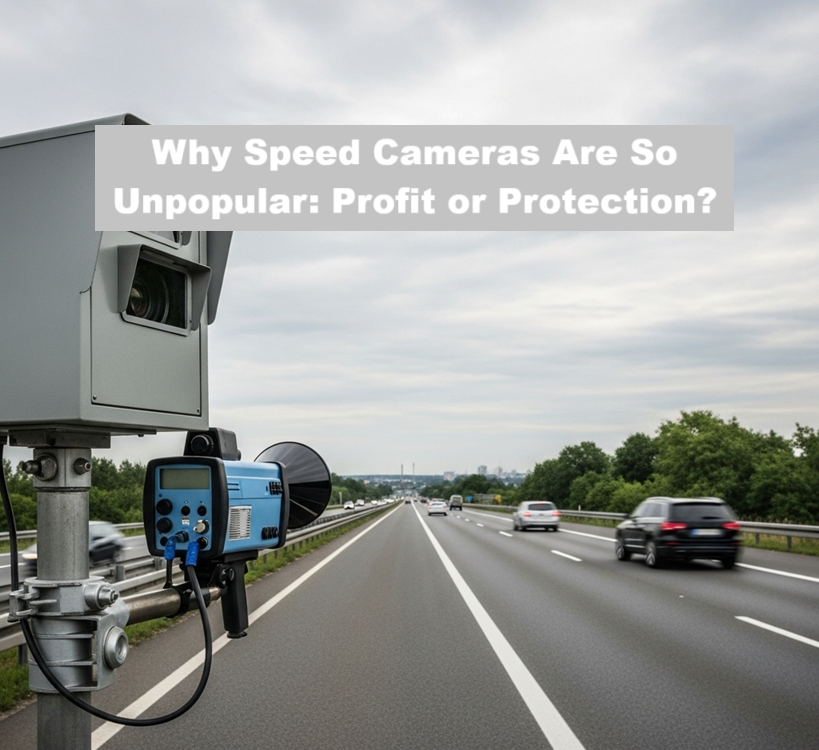
Arguments about “tax grabs” make headlines, but the evidence from Canadian cities and provinces is consistent: automated speed enforcement (ASE) cuts speeding and serious crashes—especially around schools. Where cameras have been restricted or removed, policy makers typically pivot to a narrower use (school/playground/construction zones) rather than claiming they don’t work. For Belleville and other towns, the question isn’t ideology; it’s what guardrails, metrics, and transparency we adopt if cameras remain legal in Ontario.
HOW TO DEPLOY cameras without financially hurting people:
1) Design & warn before you fine
- Self-enforcing streets: Raised crosswalks, curb extensions, narrower lanes, daylighting. Slower by design = fewer tickets.
- Big advance notice: 2–3 warning signs + a driver-feedback board (your speed) before every camera.
- Grace period: First 30–60 days at each new site = warnings only, mailed like tickets but $0.
2) Make tickets rare and predictable
- Where, not everywhere: Limit cameras to school, playground, and active construction zones (and publish the map & criteria).
- When it matters: Only during posted school hours/bell times (unless an active work zone). No 2 a.m. “gotchas.”
- Meaningful thresholds: Ticket only ≥10 km/h over (or local standard) so minor drifts don’t trigger fines.
- One-per-period rule: Max one ticket per driver per camera per week to prevent pile-ups from the same mistake.
3) Replace first fines with education
- “First-offence diversion”: Your first camera ticket in a 12-month period can be waived by completing a free 20-minute online safe-speeds module.
- Family/teen option: Households can allocate one diversion per year to a newly licensed driver.
4) Calibrate fines to ability to pay
- Hardship reductions: 50–100% reductions for recipients on verified income-tested benefits (ODSP/OW/GIS) or below a set income.
- Payment plans: 6–12 month interest-free instalments by default; no collections if the driver enters a plan.
- Day-fine pilot (optional): Peg fines to daily disposable income (common in Europe) with minimum/maximum caps.
5) Protect people from compounding penalties
- No demerit points/insurance impact for automated tickets (keep them civil, not criminal).
- Amnesty windows: Periodic forgiveness for older unpaid camera tickets when drivers enrol in a payment plan or training.
6) Lock out perverse incentives
- Earmark 100% of net revenue to sidewalks, crossings, & traffic-calming near schools; publish the ledger monthly.
- Independent audits at 12 and 24 months focused on speeds and injury collisions, not dollars raised.
- Sunset clause: Every site expires after 24 months unless safety data proves it’s still needed.
7) Radical transparency
- Public dashboard: Site list, hours, 85th-percentile speeds, tickets/week, % first-offence waivers, revenue → projects funded.
- Community trigger: If >80% of tickets at a site are within 10–14 km/h over, pause enforcement and fix the design first.
Model motion (drop into a Belleville council agenda)
That Council approve a School & Work-Zone Safe Speeds Program with automated enforcement subject to the following guardrails:
- Sites restricted to signed school, playground and active work zones; enforcement only during posted hours.
- 30-day warning period per new site; first offence in any 12 months eligible for an online education waiver.
- One ticket per driver per camera per week; thresholds ≥10 km/h over limit.
- Hardship reductions and 12-month interest-free payment plans; no demerit points or insurance impacts.
- 100% of net proceeds dedicated to a published list of crossing/sidewalk/traffic-calming projects.
- Public dashboard and independent 12- & 24-month audits; automatic sunset unless safety benefit is demonstrated.
This keeps the focus where residents want it: slow cars near kids and workers, fix the street first, and don’t balance budgets on tickets.
What the data shows (Canada)
Toronto (school zones, 2020–2022):
Peer-reviewed research led by SickKids/University of Toronto found ASE reduced the share of speeding vehicles by 45% and dropped the 85th-percentile speed by 10.7 km/h across 250 school zones. City monitoring earlier showed big declines in the proportion of drivers speeding in 30–50 km/h areas when cameras were active.
Calgary:
City analysis reports 69% fewer injury collisions at the 20 most-enforced photo-radar locations, and Intersection Safety Cameras are linked to 75% fewer fatal collisions and 56% fewer injury collisions; a cost–benefit estimate suggests $11 societal savings per $1 spent.
Edmonton:
The City’s 2022 ATE report found 31–42% collision reductions depending on site type. After Alberta restricted sites (e.g., ring roads) in late 2023, Edmonton’s 2024 update showed lower violation rates at remaining (school/playground) sites, reflecting a policy shift to safety-critical zones rather than revenue hot spots.
Winnipeg:
Independent evaluations of Winnipeg’s photo-enforcement program associate cameras with crash and injury reductions at enforced sites (peer-reviewed and TIRF reports).
Saskatchewan (province-wide pilot):
SGI’s evaluation links photo speed enforcement to fewer casualty collisions (≈35 fewer and ≈50 fewer injuries during the pilot), with large drops in violations in both high-speed and school-zone locations as drivers adapted.
Québec:
The Ministry of Transport reports collisions with bodily injury decreased at photo-radar sites; provincial guidance cites average 29% crash reduction at fixed radar locations.
What happens when cameras are limited or removed?
British Columbia (program cancelled in 2001):
BC ended its photo-radar program for political reasons despite evaluations showing safety benefits; later public documents discuss the administrative unwind after cancellation—not a finding that cameras failed. Calls to bring them back (at least for schools) have recurred.
Alberta (2024–2025 policy reset):
The province banned highway photo radar and restricted use to school, playground and construction zones. Edmonton’s latest report reflects this shift; municipalities kept ASE where risk is highest rather than removing it outright.
Ontario (2025 political move):
The Premier signalled an intent to end municipal speed cameras, rejecting mayors’ appeals to retain or reform them—despite new Toronto school-zone evidence. If the provincial ban proceeds, cities will have to replace ASE with other safety tools.
Takeaway: When programs are curtailed, provinces generally target cameras to safety-critical zones rather than claiming cameras don’t reduce risk.
Are they a “cash grab”? What the numbers say
- Behaviour change: Where carefully evaluated, speeding drops 30–50% at camera sites, and the fastest drivers slow the most—the group that drives severe-injury risk.
- Safety outcomes: Multiple Canadian evaluations associate ASE with fewer injury/fatal collisions. Benefits are strongest at schools/intersections.
- Revenue vs. design: Jurisdictions that limit cameras to signed, published, high-risk locations and reinvest proceeds in road safety blunt the “cash grab” concern and keep the program focused on risk, not revenue. (Calgary’s cost–benefit is a useful benchmark.)
If Ontario bans cameras: proven alternatives Belleville can use
- Engineering first: Tighten school-zone designs (raised crosswalks, curb extensions, compact intersections) and add driver-feedback signs at high-risk corridors. These slow drivers 24/7 without tickets.
- Targeted police blitzes: Data-led operations at school bell times and weekends; pair with publicized results.
- Speed-limit compliance package: Road diets on fast arterials; wider rollout of 30–40 km/h limits where warranted, backed by design.
- Public dashboard: Publish quarterly speeds, collisions, and near-miss data by corridor so residents can see if risk is going down.
If cameras stay legal: guardrails Belleville should adopt
- Where: School zones, playgrounds, and construction zones only (aligns with Alberta’s restrictions). Publish a map of sites and criteria.
- How: Require large advance signage and driver-feedback boards ahead of each camera; publish monthly metrics (tickets, 85th-percentile speed, repeat-offender rate).
- Fairness: Consider a cooling-off rule (e.g., no more than one ticket per driver per camera per week) and graduated thresholds for first-time offenders in school zones (education + fine), as debated in Toronto.
- Use of funds: Earmark net proceeds to sidewalks, crossings, traffic-calming, and school-zone safety—and show the ledger.
- Independent evaluation: Commit to a public impact audit after 12 and 24 months: changes in speeds, injuries, and where revenues went.
What Belleville Council should do now
- Adopt a School-Zone Safety Standard: engineering upgrades + high-visibility signage; publish a funded, 2-year build list.
- Create a Road Safety Scorecard: quarterly public reporting on speeds and collisions for top-10 corridors.
- Prepare a “with or without ASE” plan:
- If ban proceeds: fast-track design fixes, driver-feedback signs, and targeted blitzes at bell times.
- If cameras allowed: implement the guardrails above, limit to schools/playgrounds/construction zones, and make all data and dollars public.
- Engage schools & parents: joint communications at term start; walking-school-bus pilots; safe-routes maps.
Bottom line
Across Canada, the best evidence shows speed cameras reduce speeding and serious crashes, particularly where Belleville residents care most: near schools and in construction zones. Whether Queen’s Park bans them or not, Council can—and should—deliver a transparent, data-driven safety plan that slows cars where it matters and proves to residents, with numbers, that the streets are getting safer.
Speed Cameras in Belleville: What the Evidence Says (and How to Keep It Fair)
Dek: Residents are divided: safety tool or cash grab? The best Canadian data—Toronto school zones, major-city evaluations, and provincial reviews—shows cameras reduce speeding and serious crashes where risk is highest. If Ontario bans them, Belleville still needs a plan. If they remain, we need strict guardrails and transparent reporting.
Why this matters now
- Belleville is weighing school-zone safety while Queen’s Park debates the future of municipal automated speed enforcement (ASE).
- Families want safer crossings; drivers want fairness (no “gotcha” traps).
- Either way, Council must publish a with-or-without-ASE plan so the community sees measurable progress on safety.
What the best studies show (Canada, in brief)
- School-zone cameras cut speeding and lower top-end speeds (the fastest drivers slow the most).
- Cities that measure outcomes report fewer injury and fatal collisions at enforced sites.
- When provinces restrict cameras, they typically narrow them to schools/playgrounds/construction zones—they don’t argue cameras don’t improve safety; they argue for tighter scope and transparency.
Myths vs Facts
Myth 1: “It’s just a tax grab.”
Fact: Where programs are limited to signed, high-risk locations and proceeds are reinvested in road safety, cities report 30–50% fewer speeders at sites and meaningful collision reductions. Revenue falls over time as behaviour changes—that’s the point.
Myth 2: “They ticket safe drivers at night when kids aren’t around.”
Fact: Guardrails can restrict use to school hours/bell times or to locations with a proven collision/speeding history, with advance signage + driver-feedback boards.
Myth 3: “If you remove cameras, safety won’t change.”
Fact: Jurisdictions that cancelled or curtailed programs faced renewed pressure to keep them where risk is highest (schools/playgrounds) because of safety evidence.
Myth 4: “Engineering alone is enough.”
Fact: Street design is the foundation (raised crosswalks, curb extensions, road diets). Cameras—or targeted police blitzes if cameras are banned—reinforce those designs, especially during bell times.
Simple chart: before vs after (Toronto school zones)
The example below illustrates the widely cited finding that the 85th-percentile speed fell by roughly 10–11 km/h after cameras were installed across school zones. (Values vary by site; this shows a typical change.)
Before ASE: 54 km/h → After ASE: 43 km/h
What Belleville Council should do (two-track plan)
If the Province bans cameras
- Engineering first: Fast-track school-zone upgrades (raised crossings, curb extensions, daylighting, compact intersections) and install driver-feedback signs on top-10 corridors.
- Targeted blitzes: Police operations at bell times and weekend peak periods based on collision/speed data; publish results monthly.
- Public dashboard: A quarterly scorecard with corridor speeds, collisions, and near-miss trends so residents can see progress.
If cameras remain legal
- Limit the scope: School, playground, and construction zones only. Publish the site map, criteria, and data (85th-percentile speeds, violations, repeat-offender rate).
- Fairness & notice: Large advance signage + driver-feedback boards ahead of every site; consider a cooling-off rule (e.g., one ticket per driver per camera per week).
- Use of funds: Earmark 100% of net proceeds for sidewalks, crossings, and traffic-calming—with a public ledger updated monthly.
- Independent audit: 12- and 24-month evaluations focused on injury collisions and speeds, not just ticket counts.
Bottom line
School-zone safety is non-negotiable. The question for Belleville isn’t ideology—it’s accountability. Publish the rules, publish the data, and show residents where every dollar (or design change) goes. If ASE is off the table, double down on engineering and targeted enforcement. If it’s allowed, use it narrowly and transparently where it prevents the most harm.