
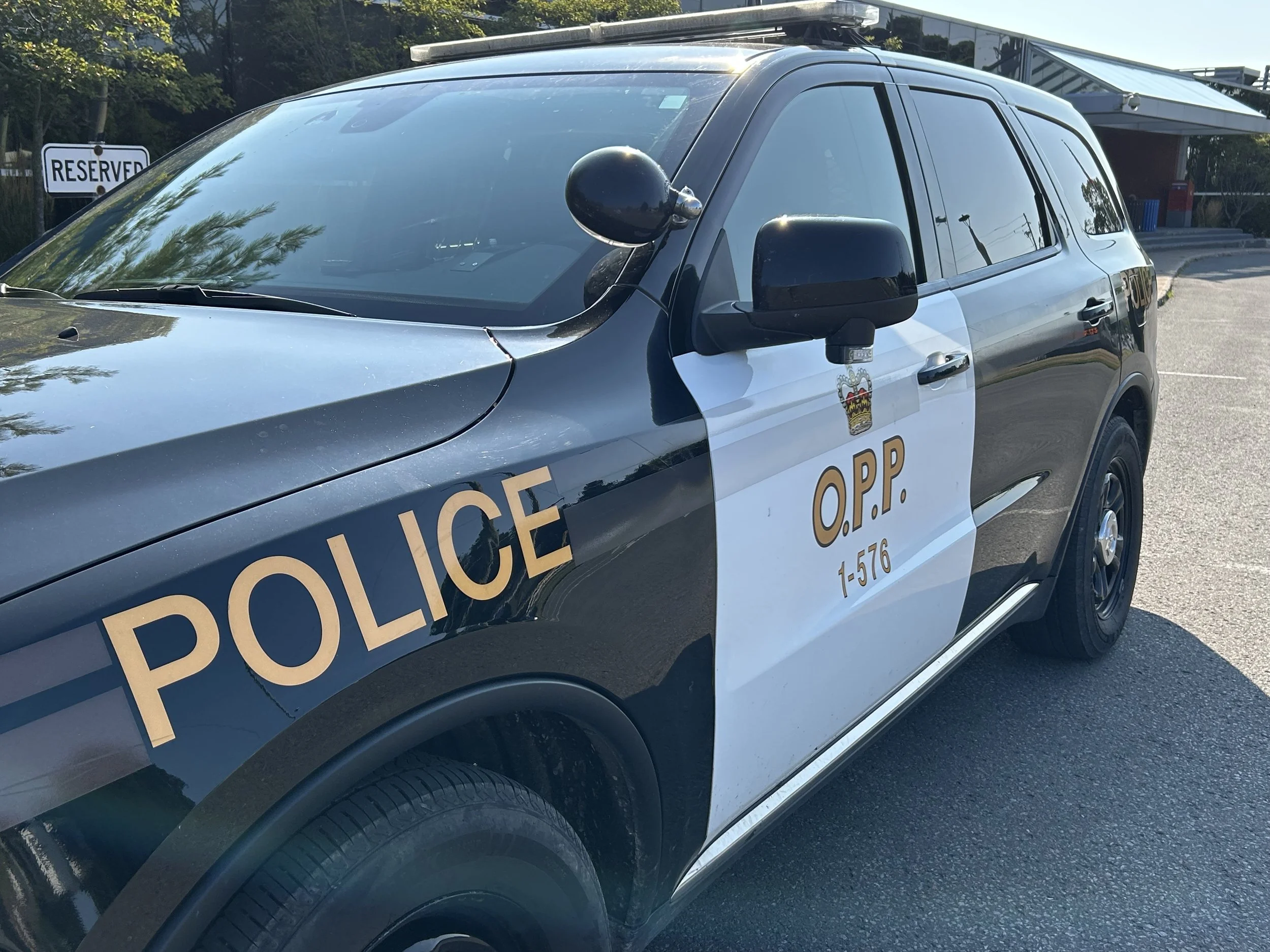
Residents across Northumberland County — from Hamilton Township to Cramahe and Trent Hills — are bracing for another round of policing cost increases as the County weighs whether to restructure how police services are delivered. Behind the scenes, a consultant-led review is already guiding the conversation about what the future of policing in the region should look like.
A system under review
Policing in Northumberland County is currently delivered through three separate models:
- Cobourg Police Service, serving the Town of Cobourg
- Port Hope Police Service, serving the urban area of Port Hope
- Ontario Provincial Police (OPP), under contract for the remaining rural municipalities (Hamilton Township, Alnwick-Haldimand, Cramahe, Brighton, and Trent Hills)
Recognizing rising costs and overlapping administration, Northumberland County Council commissioned an independent policing services review to evaluate cost, governance, and long-term sustainability. The review, posted on the County’s public engagement site Join In Northumberland, now forms the backbone of the County’s decision-making process.
Consultants steering the conversation
The consultants’ report, completed in late 2024, outlines three main scenarios:
- Full OPP model — All municipalities, including Cobourg and Port Hope, would transition to OPP policing.
- Merged municipal model — Cobourg and Port Hope would merge their police services into one regional force, while the OPP continues to serve the rural townships.
- Status quo — Retain all three existing services independently.
The report concluded that the status quo is the most expensive and least efficient option, citing duplication in administration and facilities. It argues that a merged or OPP model could deliver savings through shared buildings, reduced command overhead, and fewer capital commitments.
Dollars and decisions
The County spent about $67,000 on the first phase of the study, which has already shaped conversations about major spending decisions — notably, Cobourg’s proposed $34-million new police headquarters, flagged as a key cost pressure under both the current and merged models.
The analysis suggests:
- Full OPP model could yield the lowest overall costs due to economies of scale and shared infrastructure.
- Merged municipal model offers moderate savings but requires cooperation between Cobourg and Port Hope and potential facility consolidation.
- Status quo preserves local control but locks in the highest long-term costs.
However, these are directional models, not binding costings. Cobourg Police Service did not fully participate in data collection, meaning some figures rely on publicly available information and OPP benchmarks.
The consultant’s growing influence
The policing review has effectively become the framework for County decision-making. It defines the options, sets evaluation criteria, and determines what financial assumptions and performance indicators council will debate in the next phase.
If County Council votes to proceed, a Phase 2 “full costing” study will follow — a deeper and more expensive exercise that could bind municipalities to specific service arrangements under Ontario’s Community Safety and Policing Act.
Critics argue that this growing reliance on external consultants allows political responsibility to shift away from elected officials. Once a consultant quantifies an option as “most efficient,” it becomes the default political choice — regardless of community sentiment.
Provincial context
The Province of Ontario has acknowledged rising OPP contract costs and announced $77 million in relief funding for small and rural municipalities. Even so, invoices for townships such as Trent Hills and Alnwick-Haldimand are expected to rise in 2025 before the relief offsets are applied.
The Northumberland OPP Detachment Board, created just over a year ago, is still developing oversight and reporting standards. Councils will need to ensure that higher policing costs translate into tangible improvements in public safety and accountability.
What’s next for councils and taxpayers
County Council will review the Phase 1 findings this fall, with a decision expected later this year on whether to proceed with a full costing. The outcome could redefine policing in Northumberland for a generation.
For Cobourg, which operates its own force, the stakes are high: a switch to the OPP could reduce costs but would also mean surrendering local governance. For rural taxpayers, the question is whether the OPP’s escalating contract costs still represent good value for money.
Analysis: When councils stop thinking for themselves
Northumberland’s policing review exposes a larger trend across municipal Ontario — the steady outsourcing of public policy thinking to consultants.
The quiet hand-off of responsibility
By commissioning outside firms to define scenarios, build cost models, and interpret governance options, councils are quietly transferring not just the work but the intellectual ownership of decision-making. The consultant’s report becomes the foundation of the public debate; its assumptions become unspoken truths.
When a consultant labels one scenario “most efficient” or “lowest cost,” that language often goes unchallenged — even when based on incomplete data. Councillors, faced with thin administrative staff and limited policy resources, lean on the report for objectivity. What begins as advice soon becomes doctrine.
Erosion of local expertise
Smaller municipalities once had analysts and department heads who could run internal reviews. But austerity budgets and attrition have hollowed out that capacity. Few counties now employ in-house policy teams or data analysts capable of evaluating complex service models.
When issues like policing, housing, or waste management arise, councils bring in consultants “for neutrality.” But neutrality can become dependency. Once external frameworks dominate, local priorities — like community safety, accessibility, or civic identity — are often reduced to financial line items.
In Northumberland’s case, the County could have built a joint working group of treasurers, CAOs, and police-board members to run comparative analysis internally. Instead, it outsourced the definition of efficiency itself — allowing outsiders to decide what “effective policing” should mean for local residents.
Diluted accountability
This dependency weakens accountability. When citizens challenge cost increases, councillors can point to “the report” as proof the decision was data-driven — even if the data were partial or modelled from other regions. Transparency suffers: the public rarely sees raw data or understands the assumptions buried inside consultant spreadsheets.
In effect, political risk is outsourced along with the analysis. Councillors appear prudent by hiring experts, but they surrender the ability — and perhaps the courage — to interpret results independently.
The hidden cost of outsourcing thought
Ironically, while the County hired consultants to identify savings, it spent tens of thousands to produce a document that stops short of actionable data. The next phase — a “full costing” — will cost substantially more and likely extend dependency.
This creates a feedback loop familiar across Ontario: consultant report → partial conclusions → follow-up consultant report — all while structural issues remain unresolved.
A path back to local control
Rebuilding in-house capacity is possible. Municipalities could:
- Create a shared regional policy office to analyze service models across departments.
- Require peer review of consultant assumptions by local finance and policing experts before adoption.
- Publish all modelling data in open, machine-readable form for residents and journalists.
- Treat consultants as facilitators, not arbiters — their role is to inform debate, not define it.
The bottom line
When councils outsource not only the math but the thinking, democracy shrinks. Decisions once shaped by local knowledge become filtered through external templates optimized for efficiency, not community values.
Policing is more than a budget line — it’s about safety, trust, and local control. If councils can’t articulate in their own words why a change makes sense, it raises a deeper question: who’s really governing?