
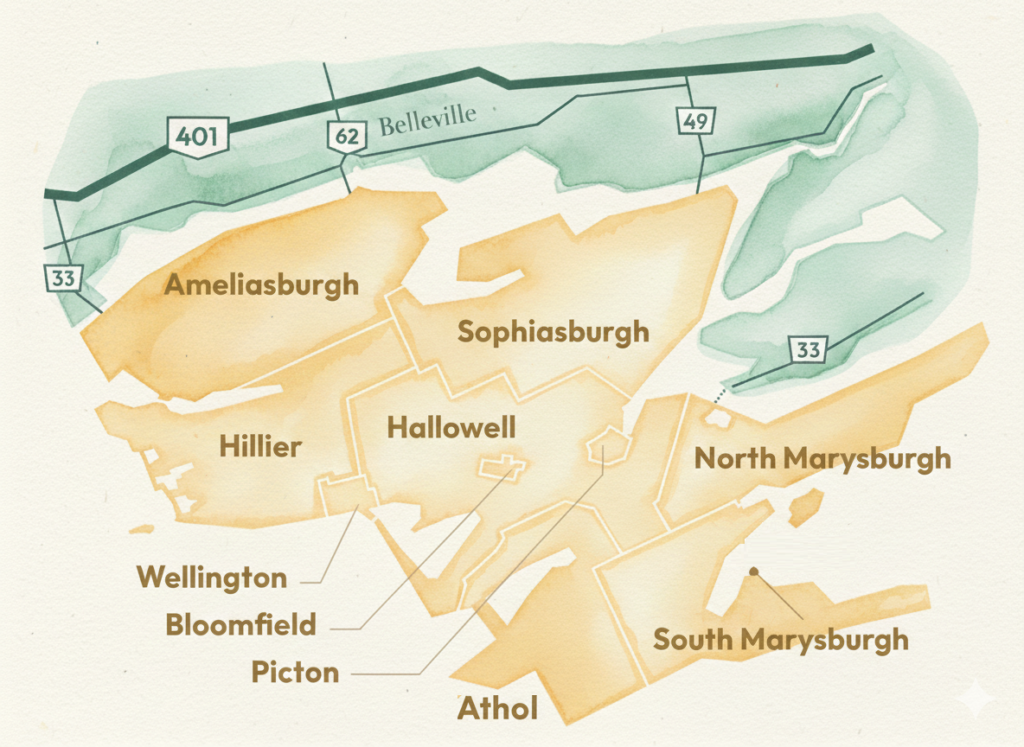
Prince Edward County: Performance scores reflect observable governance patterns recorded in public meetings, budget debates, voting records, council minutes, and publicly available communications. The assessment evaluates:
• Fiscal scrutiny during annual operating and capital budgets
• Oversight of reserve use and long-term debt growth
• Infrastructure advocacy (roads, water, public works)
• Transparency and constituent communication
• Independence in voting behavior
• Alignment with commonly expressed resident concerns
Scores do not reflect personal attributes, but governance posture and visible engagement on structural issues.
Ward Performance Summary
Performance Bands Explained
8.0 – 10.0 → Best
Clear, consistent fiscal scrutiny, transparent communication, and alignment with widely-expressed resident priorities.
6.0 – 7.9 → Better
Above–average engagement, visible independence, and constructive discourse.
5.0 – 5.9 → Good
Active participation with moderate leadership on structural issues.
3.0 – 4.9 → Needs Improvement
Limited fiscal pushback, perceived light advocacy on countywide infrastructure/affordability, or uneven engagement with resident concerns.
| Ward | Primary Governance Focus (Observed Themes) | Score | Performance Band |
|---|---|---|---|
| 1 – Picton | Urban planning and waterfront initiatives; mixed views on balance between amenities and rural services | 5.0 | Good |
| 2 – Bloomfield | Generally aligned with staff recommendations; limited structural cost challenge | 4.5 | Needs Improvement |
| 3 – Wellington | Consistent fiscal scrutiny and public reserve oversight | 8.5 | Best |
| 4 – Ameliasburgh | Persistent rural infrastructure concerns; limited visible structural budget shift | 3.5 | Needs Improvement |
| 5 – Athol | Strong resident communication; clear explanation of budget trade-offs | 7.5 | Better |
| 6 – Sophiasburgh | Policy-focused engagement; moderate fiscal positioning | 6.0 | Good |
| 7 – Hillier | Active in tourism and governance debates; mixed fiscal advocacy | 5.0 | Good |
| 8 – North Marysburgh | Ongoing CR 49 and rural road concerns; limited structural fiscal shift | 3.0 | Needs Improvement |
| 9 – South Marysburgh | Prominent environmental advocacy; debate over broader infrastructure balance | 3.0 | Needs Improvement |
| 10 – Hallowell | Development and planning engagement; moderate fiscal posture | 6.0 | Good |
Ward 1 – Picton
Score: 5.0 | Performance Band: Good
Observed Themes
Ward 1, representing the urban core, has been visibly engaged in waterfront redevelopment, downtown beautification initiatives, and planning matters tied to growth and tourism. Council debates during this term frequently included support for urban infrastructure upgrades, waterfront revitalization, and planning framework adjustments affecting the town centre.
However, resident commentary suggests mixed views regarding balance. Some rural constituents have expressed concern that capital prioritization has leaned toward amenity-oriented projects while road rehabilitation and rural infrastructure concerns have remained underfunded relative to visible downtown initiatives.
On fiscal discipline, Ward 1 participation has generally aligned with majority staff recommendations during budget cycles, with limited sustained opposition to structural cost drivers such as payroll growth, debt expansion, and reserve depletion.
Rationale for Score:
Active engagement and visibility, but moderate fiscal challenge and limited structural opposition to broader spending trajectory.
Ward 2 – Bloomfield
Score: 4.5 | Performance Band: Needs Improvement
Observed Themes
Ward 2 has generally voted in alignment with staff recommendations across budget deliberations. Public minutes show limited recorded opposition to reserve usage decisions or debt growth during the 2025–2026 cycle.
While routine participation in debates occurred, structural cost containment measures were not prominently advanced from this ward during key budget inflection points, including reserve drawdowns to offset levy increases.
Resident outreach visibility appears limited compared to some other wards, with fewer documented public budget summaries or independent financial analyses shared directly with constituents.
Rationale for Score:
Stable participation but limited evidence of structural fiscal pushback or independent reform advocacy during a period of significant budget growth.
Ward 3 – Wellington
Score: 8.5 | Performance Band: Best
Observed Themes
Ward 3 demonstrated consistent and documented fiscal scrutiny throughout the 2024–2026 budget cycles. Public meeting transcripts show repeated questioning of reserve depletion strategies, debt servicing growth, and reliance on one-time offsets.
This ward’s representative frequently articulated concerns about long-term sustainability, reserve continuity, and operating structural gaps. Public communications included visible efforts to explain trade-offs, levy impacts, and capital planning concerns to residents.
On infrastructure, Ward 3 engaged actively on local and countywide service impacts, particularly in areas tied to growth pressures and tourism infrastructure burdens.
Rationale for Score:
Consistent fiscal oversight, transparency in public explanation, and visible independence in voting patterns justify highest tier classification.
Ward 4 – Ameliasburgh
Score: 3.5 | Performance Band: Needs Improvement
Observed Themes
Ward 4 residents have repeatedly raised concerns regarding road conditions, particularly CR 28, CR 19, and surrounding rural routes. Public sentiment indicates frustration over perceived slow rehabilitation progress.
While infrastructure concerns were voiced, structural shifts in budget prioritization were not visibly achieved. Voting patterns suggest limited sustained challenge to overall spending growth, despite rural dissatisfaction.
The disconnect between infrastructure complaints and measurable fiscal outcomes during this term contributed to lower performance evaluation.
Rationale for Score:
High infrastructure frustration combined with limited structural fiscal impact during budget deliberations.
Ward 5 – Athol
Score: 7.5 | Performance Band: Better
Observed Themes
Ward 5 is frequently cited in public discourse for transparent communication. Budget trade-offs, levy implications, and infrastructure prioritization have been explained directly to residents through visible channels.
While not always aligned with minority fiscal positions, Ward 5 showed evidence of thoughtful engagement and active debate during budget sessions. Communication strength elevated public confidence even when votes aligned with broader council direction.
Rationale for Score:
Strong resident communication and visible engagement, moderate fiscal positioning.
Ward 6 – Sophiasburgh
Score: 6.0 | Performance Band: Good
Observed Themes
Ward 6 participation reflected policy-oriented engagement, including involvement in strategic discussions and structural planning matters.
Fiscal posture during budget cycles appeared moderate — not leading structural reform efforts but also not entirely passive. Resident sentiment reflects appreciation for intellectual engagement, but some frustration regarding stronger action on cost containment.
Rationale for Score:
Active policy engagement with moderate fiscal assertiveness.
Ward 7 – Hillier
Score: 5.0 | Performance Band: Good
Observed Themes
Ward 7 was active in tourism, short-term rental (STR), and governance debates, often contributing meaningfully to regulatory discussions.
Fiscal advocacy during major budget cycles appeared mixed. While participating in debate, sustained opposition to structural spending growth was limited.
Infrastructure prioritization messaging was present but not paired with major capital reallocation shifts.
Rationale for Score:
High issue engagement but moderate fiscal and structural budget influence.
Ward 8 – North Marysburgh
Score: 3.0 | Performance Band: Needs Improvement
Observed Themes
CR 49 and related rural road conditions have been persistent public concerns in Ward 8. Resident commentary indicates dissatisfaction with visible outcomes relative to tax increases.
Although infrastructure issues were raised, structural capital reprioritization was not achieved during this term. Reserve use and debt growth continued without major voting divergence from majority council direction.
Rationale for Score:
Strong rural frustration combined with limited fiscal or structural redirection during this term.
Ward 9 – South Marysburgh
Score: 3.0 | Performance Band: Needs Improvement
Observed Themes
Ward 9 has been visibly engaged in environmental and conservation matters, including land-use and shoreline issues. This has been positively received by some residents.
However, others have expressed concern that environmental advocacy emphasis may have overshadowed broader cost-of-living and infrastructure pressures during this term.
Budget voting patterns show limited structural opposition to reserve drawdowns or debt trajectory. Debate persists regarding balance between environmental priorities and immediate infrastructure and affordability concerns.
Rationale for Score:
Strong thematic engagement, but perceived imbalance relative to countywide infrastructure and fiscal pressures.
Ward 10 – Hallowell
Score: 6.0 | Performance Band: Good
Observed Themes
Ward 10 demonstrated active participation in planning and development matters, particularly those affecting growth boundaries and land use.
Fiscal positioning appeared moderate — engaged in debate but not leading structural cost containment movements. Resident sentiment suggests constructive participation but desire for stronger challenge to spending trajectory.
Rationale for Score:
Balanced engagement with moderate fiscal posture.
Summary Observation
Across wards, the dominant structural pattern of the 2022–2026 term includes:
• Continued operating growth exceeding population growth
• Use of reserves to moderate levy increases
• Rising long-term debt levels
• Persistent rural infrastructure dissatisfaction
The scoring reflects relative engagement with these structural realities rather than ideology or personality.