
Next time you hit a pothole, don’t just wince and keep driving.
Make a mental note.
Think about who makes the decisions. Think about where your tax dollars go. And think about how low a priority your daily safety, your vehicle, and your quality of life have become in the grand hierarchy of government spending.
Because that pothole isn’t just a maintenance issue.
It’s a policy outcome.
Start with the numbers.
Canada has committed more than $25 billion in total support to Ukraine since 2022. Canada’s drone support to Ukraine is 900+ SkyRanger R70s donated (890 delivered), $87M+ to the Drone Capability Coalition, $190M+ invested in Ukrainian domestic production via Danish model, plus recent $50M—totaling well over $300M in drone-related aid.
Defence spending is also rising significantly, with plans putting Canada on a path toward roughly $60+ billion annually within the next few years. At the same time, federal program spending approaches half a trillion dollars per year.
Those are national priorities. But here at home, the picture feels very different.
In Prince Edward County, the rehabilitation of County Road 49—a critical artery connecting communities and supporting tourism and agriculture—is estimated at roughly $50 million. The province has stepped up with some funding. Also more announcements about funding this week. We will believe it when we see no more potholes.
So residents are left with a simple, uncomfortable comparison: billions flow easily at the national level, but tens of millions stall locally. Next time you hit a pothole anywhere in your neighbourhood, make a mental note of the folks who make these decisions and how low a priority your wellbeing has become and how your tax dollars don’t benefit you directly.
It’s not about Ukraine—or defence
To be clear, this is not an argument against supporting Ukraine or maintaining a capable military. Canada has legitimate international obligations and security interests.
The issue is prioritization and balance.
When governments can mobilize billions quickly for international or strategic commitments but struggle to deliver visible improvements in infrastructure, healthcare access, or housing supply, public confidence erodes. Case in point: how long have you been hearing about the state of hwy 49?
People begin to ask a basic question: why is it easier to fund global commitments than to fix local problems?
The disconnect Canadians are feeling
This is not just a County issue. It is a national pattern. All Canadians must have access to good and affordable healthcare, education and housing. Universal access makes a society just and compassionate.
Canada has $12B for overseas spending, but Canadians are in food bank lines. Across Canada, food bank usage has reached record levels, with more than 2 million visits in a single month. Unemployment has ticked up to around 6.7%, and for young Canadians it is roughly double that. If your kids can’t find a summer job, think of the potholes. Stay calm and remember it. Your opportunity will come to drive change. Be patient. Housing remains out of reach for many working households, even as governments at all levels promise solutions. The town of Cochrane Ontario has declared a food emergency as over 25% of the population starts using the foodbank.
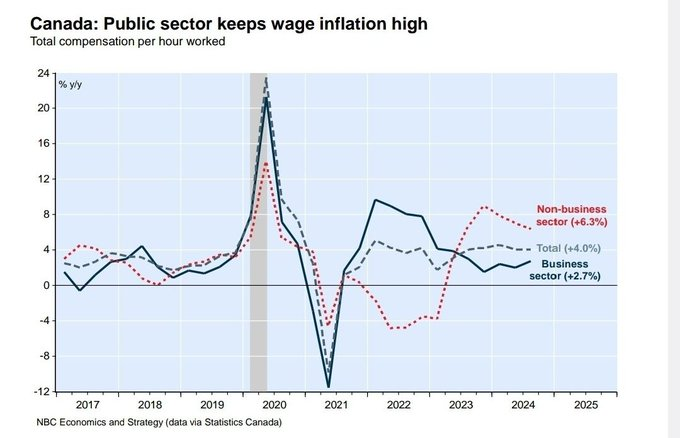
Inflation & cost of living has driven Canadians to mass unaffordability and record foodbank usage and homelessness. While wages grew, they grew much faster in the public sector- 6.3% (your taxes) than the private sector- 2.7%.
2.2 million Canadians used food banks last month. 25% of Canadians are facing food insecurity. 1/3rd of them are children. Hungry kids don’t learn well. More seniors are using food banks. People who are working use food banks.
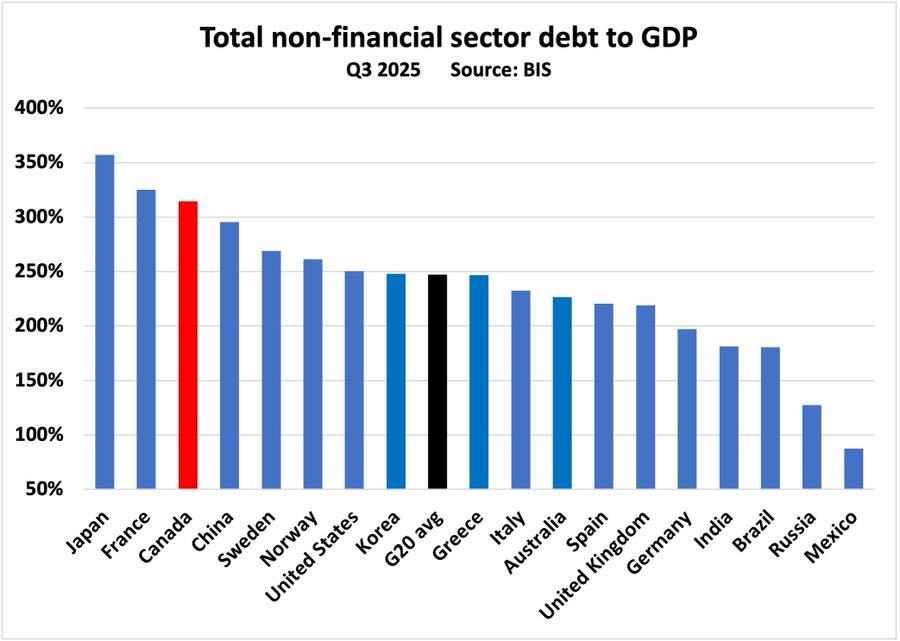
Debt is rising too. Canada’s total non-financial sector debt (all govt + business + household) hit 314% of GDP in 2025….near the top of the heap globally. According to Statistics Canada, household debt has now surpassed 100% of GDP, hitting over $3.2 trillion last quarter. Let that sink in, Canadian families now owe more than the entire economy produces. After years of inflationary spending and rising costs, households are being pushed deeper into debt just to keep up.
Meanwhile, debt servicing alone now costs Ottawa more than $50 billion annually—money that does not build roads, fix potholes, reduce wait times, feed kids, or increase housing supply.
Individually, each of these facts can be explained. Together, they create a broader narrative: governments are spending heavily, but outcomes that matter to everyday Canadians are not improving at the same pace.
Healthcare: universal in name, uncertain in practice
Canada prides itself on universal healthcare. But access is becoming the real issue.
The median wait time for specialist treatment is now around 30 weeks.
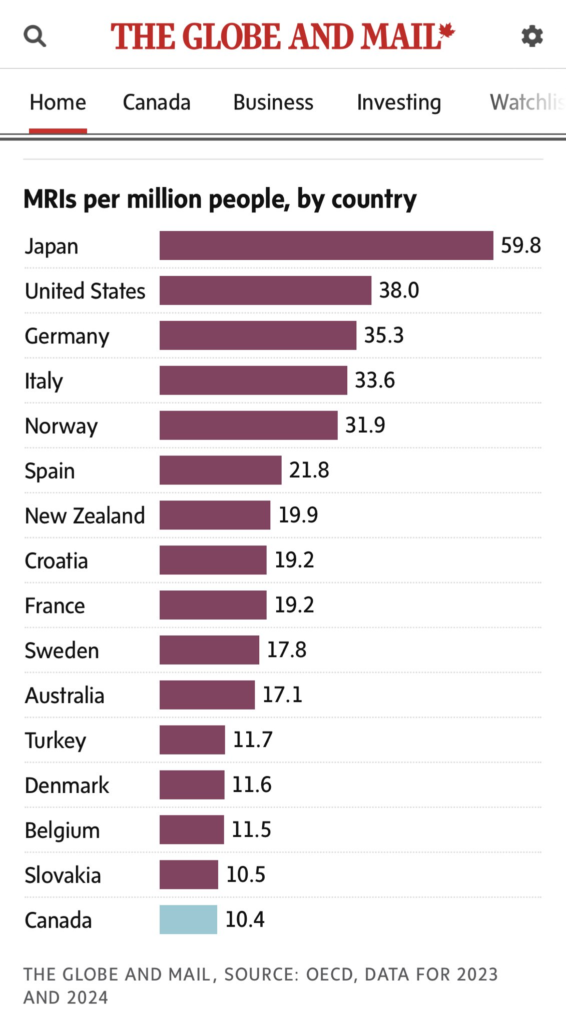
More than 6.5 million Canadians don’t have a family doctor. In Ontario alone, that number is estimated at over 2 million.
Statistics Canada just released a decade of data on the health of Canadians and there has been a significant decline since 2015. The share of Canadians in good health dropped from 68.6% to 56.4%. Emotional health fell from 78.3% to 61.2%.
What does that mean in real life?
• people lining up at walk-in clinics at 7 a.m. and missing work or delaying care
• emergency rooms handling routine care
• delayed diagnoses and worsening outcomes
Canada spends over $330 billion annually on healthcare. And yet for many Canadians, access has never felt more uncertain.
The media spending Canadians rarely see
Another layer of frustration comes from how governments fund communication, media, and public messaging—areas that are less visible than roads or hospitals, but still significant in scale.
At the federal level, CBC/Radio-Canada receives over $1 billion annually in public funding. Supporters argue this sustains Canadian culture and national coverage. Critics question whether that level of funding is justified when core services are under strain.
Beyond the CBC, Ottawa also supports for-profit journalism entities through multiple programs. Some of these entities are partly owned by wealthy individuals. The Local Journalism Initiative alone has received over $120 million since launch, and tax credits for news organizations add further public cost. While these programs aim to preserve local reporting, they also raise questions about dependence on government funding in a sector meant to hold governments accountable.
Ownership of major media entities
- The Thomson Family, $54B – $73B+; Thomson Reuters, The Globe and Mail
- The Rogers Family, Multi-Billion; Rogers Communications (Citytv, Sportsnet, OMNI)
- The Shaw Family, Multi-Billion; Corus Entertainment (Global TV, W Network, YTV)
- Pierre Karl Péladeau, $1.8B – $3.4B; Quebecor (TVA Group, Videotron, Journal de Montréal)
Then there is direct government advertising. Federal advertising spending was roughly $70–80 million in the most recent fiscal year. Provinces add to this through their own campaigns—often promoting programs, policies, or public messaging initiatives.
In Ontario, for example, government advertising regularly appears in community newspapers, digital outlets, and radio. Some of it is essential public information. Some of it, critics argue, leans toward “feel-good” messaging designed to reinforce government narratives rather than inform citizens.
Individually, these expenditures may be defensible. Collectively, they reinforce a perception problem: governments appear well-resourced when it comes to communication and visibility, but slower and more constrained when it comes to delivering tangible improvements.
The local reality: where it actually matters
County Road 49 is not an abstract policy debate.
It is:
• your commute
• your suspension
• your safety
• your tourism economy
• your connection to the rest of the region
And like many infrastructure projects across Ontario, it sits in a gap—between municipal responsibility, provincial funding, and federal inaction.
Each level points elsewhere.
Meanwhile, residents drive over the result and straight to the auto repair shop.
The bigger economic backdrop
Canada’s broader economic challenges amplify this frustration.
Productivity growth has lagged behind peer countries for years. Business investment is relatively weak. Housing supply has struggled to keep pace with population growth. Healthcare systems are under strain. See what Statistics Canada and the Bank of Canada have to say about declining productivity in Canada.
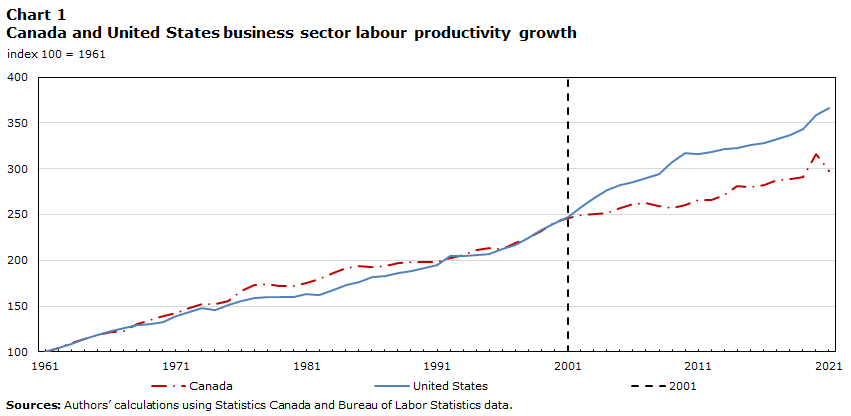
We can virtue signal all we want about the US. The fact is the US is far more productive that Canada and has made great strides after being at parity with Canada in 2001.
These are not short-term issues. They are structural. And they require sustained, coordinated investment to fix.
But when public spending appears disconnected from these priorities, it creates the impression that governments are managing headlines rather than outcomes.
The broader problem: spending without outcomes
Canada is not short on spending.
It is short on alignment.
Productivity is lagging behind peer countries. Business investment is weak. Housing remains unaffordable. Healthcare access is deteriorating. Infrastructure gaps persist.
These are not isolated issues.
They are symptoms of a system where spending decisions are increasingly disconnected from everyday outcomes.
When billions are deployed quickly for some priorities but basic services lag for years, people notice.
And increasingly, they are speaking up.
What needs to change
This is not about cutting everything or retreating from global responsibilities.
It is about balance—and accountability.
• Fund critical infrastructure like it actually matters
• Tie spending to measurable improvements in daily life
• Prioritize affordability, access, and mobility
• Be transparent about where money goes—and what it delivers
Because trust is built locally.
Not in announcements. Not in press releases.
On roads. In hospitals. At the grocery store.
The bottom line
Canada is still a strong country.
But something is shifting.
When you’re dodging potholes, paying more for groceries, waiting months for care, and watching billions flow elsewhere, it becomes harder to believe the system is working the way it should.
That gap—between what is spent and what is felt—is where frustration lives.
And until it’s addressed, it’s only going to grow.
Chris Malette Voted Against Recovering $59.5 Million from ArriveCAN Contractor
While ratepayers across Ontario dodge crater-sized potholes, wait endlessly for a family doctor, and face property taxes that outpace inflation, our federal government continues to throw away money like confetti—on everything from foreign wars to corrupt, no-bid contracts that deliver little public value. The $59.5 million ArriveCAN fiasco, and the fact that MP, Chris Malette…Read more
The $12 Million Question: What Prince Edward County’s Sunshine List Really Shows
Prince Edward County’s 2025 Sunshine List isn’t just a headline—it’s a signal. The County disclosed 92 municipal employees earning over $100,000, with total compensation exceeding $12 million annually. That’s a sharp increase from 64 employees in 2023, a 43% jump in just two years. Even more striking: the County employs roughly 220 staff, meaning nearly half of all employees now earn above the Sunshine List threshold. Read more.
Changing the Rules Mid-Game: Why Prince Edward County’s Election Sign Decision Raises Serious Concerns
In any democratic system, the rules matter as much as the outcome. That’s why Prince Edward County Council’s decision to shorten the election lawn sign period—during an election year—has raised important legal and ethical questions. Under the proposed change, candidates would only be permitted to display election signs beginning August 22, despite nominations opening May 1. That significantly compresses the time available for candidates to reach voters ahead of the October 26 election. Read more.
From Crude to Crust: The Invisible War Tax on Your Grocery Bill
The average Canadian grocery trip is starting to feel like a high-stakes negotiation. Just as food inflation appeared to be cooling—dropping to 5.4% in February 2026—the outbreak of conflict in Iran on February 28 has sent a shockwave through the global economy that is landing directly in our shopping carts. While the fighting is thousands of kilometers away, the economic tether between Middle Eastern stability and Canadian food prices is shorter than most realize. Read more.
The Quiet Shift No One Is Talking About: Are Counties Becoming Places You Can’t Afford to Live — But Also Can’t Afford to Leave?
There’s a strange contradiction emerging across Ontario’s counties. People are moving in — but long-time residents are feeling pushed out.
Businesses are busy — but many are barely surviving. Homes are worth more — but fewer people can actually afford to live in them. Something has shifted. And while we talk about it in pieces — housing, taxes, groceries, healthcare — we rarely step back and ask the bigger question: Are counties becoming economically unlivable for the people who built them? Read more.
The County Is Changing — But For Whom?
“We didn’t leave because we wanted to. We left because we couldn’t afford to stay.” That sentence appeared in the comments after CountyFirst asked a simple question: Is Prince Edward County becoming too difficult to survive in? What followed wasn’t a debate. It was a pattern. Stories of rising costs. Of wages that don’t keep up. Of families making quiet decisions to leave. Of businesses trying to hold on through another winter. Read more.
Is Prince Edward County Becoming Too Hard for Businesses to Survive?
Rumours circulating within Prince Edward County’s hospitality community have raised questions about the financial stability of one of the region’s most visible tourism developments, a notable resort in Wellington. Several individuals familiar with recent staffing changes say employees were laid off. Some sources within the local hospitality sector have speculated that the resort may be facing financial pressure. Read more.
Prince Edward County Is Choking Innovation — and the Data, the Law, and the Outcomes All Point to the Same Failure
This is no longer anecdotal. According to a recent economic snapshot presented to Council by the County’s own Economic Development Officer, nearly a quarter of the County’s wineries and vineyards are currently for sale. Three of six cideries, two distilleries, and at least nine wineries or vineyards are on the market. Read more.
Audit of the 2022–2026 Council term
As the October 26, 2026 municipal election approaches, the residents of Prince Edward County are conducting a rigorous audit of the 2022–2026 term. This Council has presided over a period of unprecedented fiscal volatility, marked by a $90.9 million budget and a debt trajectory that many fear has reached a point of no return. The following report card evaluates the performance of all ten wards, focusing on cost-of-living increases, infrastructure delivery, and the independence of leadership. Read more.
Food Insecurity: What the Data Actually Shows.
Clearing Up Common Misconceptions. Food insecurity in Canada is often misunderstood. Some assume it affects only the unemployed. Others believe it is limited to major cities or remote northern communities. There is also a perception that food insecurity surged briefly during COVID-19 but has since stabilized. The data tells a different story. Food insecurity now affects working households, families with children, rural communities, and urban centres alike. Read more.
2026 Municipal Elections: Candidate Guide
As Prince Edward County enters a pivotal election year, the need for professional rigour and transparent governance has never been greater. With the 2026 Municipal Election on the horizon, we are committed to empowering candidates who are ready to move beyond ‘politics as usual’ and tackle the County’s $131M debt and infrastructure challenges with a technical, data-driven mindset. Read more.
Leave a Reply